68: Navigating Chronic Illness with Compassion
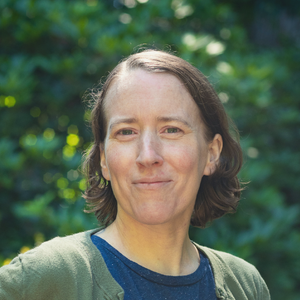
With Nadine Pinede, Author + Poet
Do you live with a chronic illness? In this episode, I talk with Nadine Pinede about softening into compassion and:
• Adjusting to a diagnosis of chronic illness as a highly sensitive person
• Listening to the body’s signals with curiosity instead of frustration
• Learning to pace yourself and find community to live more sustainably
• Finding the wisdom and resilience in health challenges
Nadine Pinede is the daughter of Haitian exiles, an award-winning author and poet, and a mindful self-compassion guide whose work explores healing and belonging through story and nature. A Rhodes Scholar and lifelong creative, she teaches others how to reconnect with the natural world as founder of “Coming to Our Senses” retreat in Arles, which was inspired by her recent diagnosis of Ehlers-Danlos Syndrome. Her debut novel When the Mapou Sings was named an Américas Award Honor Book. Her forthcoming publications are the anthology Earth is a Living Thing: Black Poets and the Natural World, Uprooted: A Journey in Poems, and Soundwalker: A True Story of Making Music with Nature.
Keep in touch with Nadine:
• Website: https://nadinepinede.com/
• Instagram: https://www.instagram.com/nadinepinede
• LinkedIn: https://www.linkedin.com/in/nadinepinede
Resources Mentioned:
• Coming to Our Senses Retreat: https://www.comingtooursensesretreat.com
• When the Mapou Sings by Nadine Pinede: https://bookshop.org/a/63892/9781536235661
• Uprooted: A Journey in Poems: https://www.terranovapress.com/books/uprooted
• Self-Compassion Break: https://self-compassion.org/practices/general-self-compassion-break-2
• EDS Society: https://www.ehlers-danlos.com
Thanks for listening!
You can also follow "SensitiveStrengths" for behind-the-scenes content plus more educational and inspirational HSP resources:
Instagram: https://www.instagram.com/sensitivestrengths
If you have a moment, please rate and review the podcast, it helps Sensitive Stories reach more HSPs!
This episode is for educational purposes only and is not intended as a substitute for treatment with a mental health or medical professional. Some links are affiliate links. You are under no obligation to purchase any book, product or service. I am not responsible for the quality or satisfaction of any purchase.
Episode Transcript
Nadine Pinede: 0:00
This year a new journey begins. I didn't ask to go. I don't know where it leaves. My bags are too heavy. They dislocate my joints. My connective tissue dissolves. I melt from within. What words describe when the body has no math? Eller Stanlow syndrome. One doc or two. Syndrome makes it sound made up. But you don't look sick. Invisible doesn't mean imaginary. Some days the world is measured in breath without pain. My spine threatens to burst from my skin. I wince when I move and feel bruised wherever bone meets flesh. But my skin still remembers the earth. And so I write.
April Snow: 1:10
I invite you to join me as I deep dive into rich conversations with fellow highly sensitive people that will inspire you to live a more fulfilling life as an HSP without all the overwhelm. In this episode, I talk with Nadine Penned about adjusting to a diagnosis of chronic illness as a highly sensitive person, finding the wisdom and health challenges, and softening the frustrations with self-compassion, community, and nature. Nadine is the daughter of Haitian exiles, an award-winning author and poet, and a mindful self-compassion guide, whose work explores healing and belonging through story and nature. A Rhodes scholar and lifelong creative, she teaches others how to reconnect with the natural world as the founder of the Coming to Our Senses Retreat, which was inspired by her recent diagnosis of Ellers Danlow syndrome. Her debut novel When the Maphouse Sings and Uprooted, A Journey in Poems are both now available. For more HSP resources and to see behind the scenes video from the podcast, join me on Instagram, TikTok, or YouTube at Sensitive Strengths or sign up for my email list. Links are in the show notes and at sensitivestories.com. And just a reminder that this episode is for educational purposes only and is not intended as a substitute for treatment with a mental health or medical professional. Let's dive in the Dean, welcome back to the podcast. So happy to have you here again. Yes, thank you. And listeners may remember you from episode 39. We explored finding your voice to fear self-compassion. Today we're going to be exploring how self-compassion can be more of a resource for navigating chronic illness, health pain. So I'm excited to dive into that with you. Could you share a little bit about your own journey with chronic illness?
Nadine Pinede: 3:23
Well, it's definitely been a long and windy road and many years of misdiagnoses. And I think that's true with a lot of people who have these kinds of conditions. And by that, I'm talking specifically now about Ellers Dunlo syndrome. I wasn't familiar with it at all when I heard the diagnosis. I'd heard that I had fibromyalgia, I heard many other things at some point. Shogun syndrome was mentioned, autoimmune issues. And I kind of gave up having a definitive answer that made sense. But I went to see a rheumatologist in the spring after a journey, and I came back, and my entire body was, you know, essentially feeling as if it was falling apart. And this was after a series of like three surgeries in two years. And the rheumatologist had me do a test which involves bending and movement. And he looked at me and said, Well, I can tell that you have what's called hypermobility elder Stanimo syndrome. And I said, What is that? And what does that mean? And of course, that began my journey to understanding a little bit more about this condition that actually affects a lot of people. But a lot of people may be misdiagnosed or don't know that they have this.
April Snow: 5:02
And I've seen clients go through this process of chasing down the diagnosis because doctors aren't necessarily familiar with it. There's not a clear path of testing. And so I can imagine it was a surprise. Maybe was it a relief also to know this is what's happening?
Nadine Pinede: 5:24
It was a surprise and definitely a relief because not only did it help me understand kind of the constellation of symptoms that I'd experienced, but also what my mother had experienced. And she was not diagnosed during her lifetime. This is a hereditary condition. But when I look back at what she went through, I really see that a lot of it could have been caused by EDS.
April Snow: 5:58
Yes, it's true. It oftentimes is passed down, and it's hard to see family members who maybe were struggling or suffering and not knowing why. And now I imagine you're putting those pieces together.
Nadine Pinede: 6:16
Yes, I'm putting them together, but I think I had a period of a little bit of anger, if I can really call it that. And the anger was just it not having been believed many times, you know, having been told that, oh, it's just depression, or it's just in your head, or you're exaggerating the level of pain, you know, so much so that there were times that I couldn't be honest about what I was feeling because I felt that I was being judged. And I do know that medical racism is a real thing, especially affecting women of color. It's here in Belgium as well. We've had incidents of people, immigrants, especially being turned away from hospitals because they don't speak Dutch. And that is a case of medical racism.
April Snow: 7:18
Oh, absolutely. I mean, we see it all the time. Women, especially women of color, where you're not taken seriously, you're dismissed, your symptoms are minimized, and especially pain. Yes, exactly. Like you're supposed to be, and I don't know if this is true for you, but this is what I've heard from a lot of women of color that you know you're supposed to be tough, so you shouldn't be complaining about pain. Um when you're a human who's that's right.
Nadine Pinede: 7:46
Well, and it's interesting because also through our own cultures, sometimes that's reinforced. So when you grow up in a culture like Haitian culture, where people have been through so much through the generations, that toughness is prized as a virtue. You know, the ability to withstand a lot is something that's valued. And so to complain about pain can sometimes feel like, well, you know, what's wrong with me? It's it's something that is a flaw. And Sora Neil Hurston had a great quote about that saying, if you don't tell people about your pain, they'll kill you and say that you enjoyed it. And that's a quote that stayed with me.
April Snow: 8:35
That's powerful. Like you're you're just supposed to enjoy it.
Nadine Pinede: 8:41
Or you're not saying anything, so it might be fine.
April Snow: 8:45
Right, exactly. When how could you not be in pain? It's dehumanizing.
Nadine Pinede: 8:51
I think, yeah, I think there's a lot of work to be done, just also decolonizing our medical institutions in the sense of taking away the assumptions that some people's pain is valued more highly than other people's pain.
April Snow: 9:08
Mm-hmm. Absolutely. It's, I mean, it's so common that white people or white women are taken a lot more seriously than women of color. Yeah. And so this is something I mean, it's just having seen other people go through the EDS diagnosis process. It feels like a miracle when it actually happens.
Nadine Pinede: 9:30
Yeah, I'm so glad that you're able to, you know, bring this up because for me, as I said, I felt very alone and isolated for many years, partly by my own pain and by the fatigue. So it's the combination of pain and fatigue that really can wear people down. So I felt physically and emotionally isolated, and then being in a new country, a new culture, I had to adjust to that. And what I found is that when I discovered or when this diagnosis was revealed to me and I educated myself, I also found a community of people who offer support and who know and who can give advice from a place of knowledge and understanding and compassion.
April Snow: 10:25
I mean, community is so important to know that you're not alone.
Nadine Pinede: 10:29
Yes.
April Snow: 10:30
You're not crazy, you're not being dramatic.
Nadine Pinede: 10:33
That's right. Especially when you're told, you know, you don't look sick.
April Snow: 10:37
Right, exactly.
Nadine Pinede: 10:39
It's you know, invisible and hidden. And that's another, if you think about it, it's another sort of moral judgment on, but you don't look sick. You know, you're supposed to look sick if you're really sick.
April Snow: 10:50
Exactly. People they forget that you can be experiencing something internally and it not be show on the outside.
Nadine Pinede: 10:58
Yes, yes, especially with something like this. So yeah, I've written about this and I'm probably gonna write more about this because it's just new to me and I'm learning and I'm opening my mind.
April Snow: 11:10
Yeah, I hope you do because there's doesn't seem to be a lot of resources out there. No. Mm-hmm. So you talked about the adjustment process of receiving this diagnosis, and I guess I imagine internalizing and making sense of it. How has that experience been as a highly sensitive person? Have you been able to find a sense of resilience in it, or has it been more overwhelming? Well, I think it was both.
Nadine Pinede: 11:37
You know, at first it was overwhelming, and partly because I see myself as a highly sensitive person, but I'm also a high sensation-seeking person, you know. So I like both. I like to be in the middle of, let's say, an adventure, a travel, someplace new, and taking in completely new environments. But then I can be overwhelmed by it. And generally there's kind of that payback period, you know, like the body decides, okay, it's collapsing now, and then I'm kind of out for a week or so recovering from whatever adventure it was. So I think with the diagnosis, I felt uh overwhelmed, but it was also this sense of oh, there's some clarity now. You know, it felt like there's a clear, or at least there's not clarity in the sense of, oh, there's a simple solution to this, but there's clarity in not feeling that 10 different things were being told to me, and maybe one of them was right. And I know that many people can have comorbidity, so you can have several things going on at the same time, but understanding at least the basics of Aller's Donald's really helped me have clarity about how I could make myself stronger. So the resilience came after the feeling of being overwhelmed.
April Snow: 13:19
It makes sense as you're learning more about it and empowering yourself that way through information. And but it yeah, it sounds like it is a and support exactly, knowing you're not alone and other people you can lean on. Yeah.
Nadine Pinede: 13:32
And the LR Stonlow Society, I want to say they do a lot. They have a great website, I think around the world, there's a UK branch, but they have a website with a lot of helpful information on it. So that was one of the first places I went. And from there, I attended some support groups, online support groups. I was able to share information about my diagnosis on the anniversary of the Americans with Disabilities Act. And that was very special to me because it was the first time I was, you know, sort of announcing it in a public way. And I got a lot of support from that, and I really appreciated that.
April Snow: 14:17
What an honor to be part of that process. When you're going through this process of understanding your body in this new way, and I'm curious, how can you listen with care, with curiosity instead of getting frustrated that you have to maybe take a week off or disengage when you had something planned or your your high sensation side doesn't get the nourishment it needs? Yes. How can you take care of yourself in that?
Nadine Pinede: 14:44
Well, that's you know, that's always the balancing act. It's the balancing act of when I think of Eller's downloads, I think of it in a metaphorical way as well, because it's connective tissue. So I think of the fact that the connective tissue is being strained and pulled. And what do you do when that happens? Well, you try to strengthen yourself from within. You try to strengthen the muscles that hold together the joints, that hold together the fascia, that helps. It doesn't solve everything. So my idea of strengthening those muscles is uh doing things like uh recalibrating, taking time to be in the natural world, taking time to sleep and rest when I need to, instead of letting myself burn myself out and then recovering from that. You know, the binge or famine way of doing things is not going to work for me anymore. And I don't think I took pacing as seriously as I should have, especially not when I had a book, a debut novel being launched. And I just felt I should accept every invitation, I should do everything, I should write every you know, piece that I'm invited to write. I overloaded.
April Snow: 16:08
Yeah, what a teacher.
Nadine Pinede: 16:11
Yeah, the body's a great teacher if we listen.
April Snow: 16:15
It's such a great teacher, yes, and I can understand that, you know, when you're you want to keep up, you want to pace yourself with everybody else. And I've heard other sensitive authors talk about that, where they thought, oh, I should be doing what I think I'm supposed to be doing. Exactly.
Nadine Pinede: 16:33
And you know, you do more of that, and I'm not now as much on social media, but because you see so much being done on social media, you feel that part of your work as an author is to always be out there promoting something on social media. And I realized that that was taking a lot of energy and time, and it wasn't necessarily making me happy. I have no idea if it was helping, you know, sell books, but in some ways it helped connect me with other people. So I'm grateful for that. But I do think that I tried to keep up with a standard that it just wasn't realistic for me, and it wasn't good for me.
April Snow: 17:20
Right. It's not sustainable. It's I mean, it's not good for us generally, but especially if our bodies are managing a chronic health condition or any type of stressor. And we can really push ourselves over the edge, but it it's hard. Yeah, there's a lot of pressure, right, to keep up.
Nadine Pinede: 17:39
Yes. And when you say sustainable, that's such you know, that's such an important word too, because for me there was that sense of kind of internalized guilt because I was already writing about a topic that was difficult. It was being published by an independent publisher, and I wanted to do is to bring this story to readers. So I felt that I really couldn't say no or shouldn't say no. So yeah, that's something that bothers me still.
April Snow: 18:12
Well, I can imagine, and I think a lot of people could relate to that, where it feels like there's something on our shoulders, whether it's raising a child, caring for an elder, being active in the community, writing a book that, and I know your book had strong personal and cultural roots for you. Yes. So of course you want to get it out there, but also trying to take care of yourself in the process so you can continue doing the work. Yes.
Nadine Pinede: 18:40
And I was very fortunate to have friends and family who helped me through this. So through the year and the months that are involved, you know, the months in preparation and then the actual months and the kinds of activities you do afterward. I had very, very good friends who helped me in many ways, from driving me to events and just allowing me to be able to rest and stay at their place. Without them, I would not have been able to do the launch, really.
April Snow: 19:19
It does take a village, it takes a community. Yes, yes. I don't think having I'm in the process of writing a book now. You just don't realize how many people are behind the scenes lifting up a book.
Nadine Pinede: 19:32
That's right.
April Snow: 19:33
Getting it out into the world, and we really need to lean into those folks.
Nadine Pinede: 19:37
Yes, and to always be saying thank you because they're making it possible. You know, not only our family, our partners, spouses, but you know, the editors, the copy editors, the people doing the design, the cover art, everyone. It's an amazing process, and it's so collaborative, and yet really only one person at the end is the face of the book, which I find interesting.
April Snow: 20:05
It's true that you know, behind that one person, there's maybe 10, 20, 30 people. Oh, yes, yes. Yeah. How is it for you? And maybe we should, if you're open to it, just say a few words about your book for folks who maybe didn't hear the last conversation. Would you be open to that?
Nadine Pinede: 20:23
Sure, sure. I mean, my book was set in the 1930s, Haiti, and it was based on the real life research of the anthropologist and author Zoraniel Hurston, who went to Haiti on a Guggenheim fellowship to research zombies and voodoo and traditional beliefs in both Jamaica and Haiti. But the Haitian part of her work was what interested me because she mentioned a woman who helped her. And actually, this woman named Lucille was in the epigraph of a book called Tell My Horse. And there was nothing known about her. And I just started to wonder who was she and how did she help Zora? And what kind of person would she have been growing up in Haiti during the American occupation of 1915 to 1934? So it started with a question, it started with a mystery, and I believe in writing about what interests you and what you don't know about. And that's how the novel began. And then from there, it grew into a novel in verse. So it was a novel in prose, and then I broke it up and started to write it in poems, and poetry was always my first love, so it was really a return to my first love.
April Snow: 21:55
Oh, it's so beautiful, Nadine, that it was this personal exploration curiosity for you.
Nadine Pinede: 22:03
And I have to say, based on a lot of my mother's stories about her own grandmother. And you know, I don't know if these stories were true or not, but the character that she painted of this very strong, independent, defiant woman, was the character that formed Lucille, my main character in the novel. So my mother's stories were very, very important, and the novel is dedicated to her.
April Snow: 22:37
You're carrying those stories on in this book. Yes. I love that so much. Because those stories can get lost easily. And you've now put them in print.
Nadine Pinede: 22:49
Yes, I tried to do my best. She was a wonderful storyteller, unfortunately, no longer with us uh for five years, coming on five years in January. But, you know, I think she would have been proud to see the novel.
April Snow: 23:08
I'm sure. And makes sense why that drive or I don't want to call it pressure, but maybe the love to get the book out there is even you feel it even more. Yes, definitely.
Nadine Pinede: 23:21
I did. I felt it even more. You know, I felt I want to make sure that anyone who's interested in this can have this or at least know that it's out there. And I got an unexpected boost in that through an award from the Americas Book Award, which is a group of the Center for Latin American Studies programs, and they award this every year to books that authentically represent Latin American culture. And my book received an honor book award. And I didn't know that this was coming, and to have it happen means that there'll be opportunities for me to talk with educators about how to use my book in the classroom and ways of tying it into the curriculum. So it's a really it was a lovely, lovely surprise.
April Snow: 24:16
Oh that is a surprise at knowing that this is going to get your books out in front of students and people in the world. Yes, it does help talking about the collaboration, the community, that's a way for your book to kind of have legs without you needing to sacrifice yourself so much, your physical health or energy.
Nadine Pinede: 24:38
That's right. And my mother would have loved that because she was a teacher for many years. So, you know, the teacher in us, and my niece is the teacher. So we have a lot of kind of educator genes in us. So um, she would have loved the fact that it is, you know, now being considered for classroom use. And I have an opportunity to share that in a webinar coming up in January called the Global Reads, and I'll be talking to people about how and if they're interested in using my novel, maybe some ways that we can approach that. So I love that.
April Snow: 25:14
That's you know that's amazing. And I just I love it so much that you're continuing that lineage of your mother, but maybe in a slightly different way.
Nadine Pinede: 25:24
Yes, that's true. That's true. Teachers and librarians are two of my favorite people.
April Snow: 25:31
Oh, I know. Same. I just love anyone who celebrates books and learnings. That's right. That's right. And there's so many different ways to do it, but librarians have a special place in my heart.
Nadine Pinede: 25:45
They really do. They absolutely do. I wrote a thank you column in the school library journal to librarians, and that was part of preparing for the book's publication. But actually, to me, it was just an opportunity to say how important libraries have been since coming in as an immigrant to the US.
April Snow: 26:05
Right, right. I mean, librarians now are doing, I mean, they're almost doing social work.
Nadine Pinede: 26:11
Yes, they're doing a lot. And we are doing a lot, and I consider them unsung heroes of our culture.
April Snow: 26:19
Same, absolutely. I don't think we realize just how much they're holding in community. Yeah.
Nadine Pinede: 26:30
And she also helped me with the book watch in so many ways.
April Snow: 26:36
Yeah. You have such a lovely network or family, however you want to call it. Community. Community.
Nadine Pinede: 26:44
Very grateful for that.
April Snow: 26:46
Yes. So you're it sounds like you're finding ways to balance taking care of your health, doing the work that you feel so called to do. And I'm wondering what's happening behind the scenes. You hinted a little bit about connecting with nature. I know we've talked a little bit about in the past about self-compassion. Could you talk a little bit more about how you're navigating your physical health to be able to live your life?
Nadine Pinede: 27:13
Well, you know, I definitely didn't have a smooth transition into accepting that EDS was going to change the way I should do things. So I think I believe that, you know, I could keep going, doing what I was doing, but just be a little more mindful. And that's not at all what happened. You know, I had some crashes, I had some really difficult times, and I had periods where I thought, okay, I'm going to practice what I've been teaching, which is mindful self-compassion. I need to turn it to myself. And I would do what's known as a self-compassion break. And it's, you know, done anywhere, anytime. You don't have to meditate, but it's just taking the time to say, this is what suffering feels like, whatever you're going through at that moment. And then to say, I'm not alone in this. I am not alone in whatever suffering I'm experiencing. And then to say, what is the next step that I can take to alleviate that suffering? And those three things helped me through a lot.
April Snow: 28:35
Yeah, acknowledging it is such an important part. And just coming back to that piece around I'm not alone, there's nothing wrong with me for feeling this way. Just remembering that other people experiences too can be so powerful. And then yeah, taking an action around it. And that was the action.
Nadine Pinede: 28:53
The action to, you know, answer it more specifically was to say, okay, what is helping me? What will help me out of this crisis is to return to what I love. And what I always loved as a child was poetry. And so I returned to poems and just started compiling a book. And the collection, before I knew it, it was growing and getting to a collection. And I realized that poetry was a form that was natural to me. It was almost like breathing, and it brought me a lot of joy.
April Snow: 29:38
So we do have to go deeper as sensitive people when we're taking care of ourselves. It's not just the kind of superficial self-care, but it's like, yes, what lights me up, what fills my soul.
Nadine Pinede: 29:51
Exactly. Exactly. And to say what fills my soul and to unapologetically claim that. You know, whatever it is. There's a great show that we watch called Make It It Market, which is a British show, so I don't think it's in the US, but it's about craftspeople who you know have a passion for ceramics or whatever they're doing, but they can't do it full time. And so they're trying to find ways of turning this passion into something they can always do. And I love the show because it is about people whose eyes light up when they talk about woodworking or ceramics or blacksmithing, whatever they're practicing. So whatever it is that brings that joy is the source of healing and can be a source of healing.
April Snow: 30:43
Right. Bring it into every day. It doesn't have to be your career, it doesn't have to be every, you know, your full-time focus, but can you find little bits of reading poetry or doing a little bit of woodworking? Yeah, it's a great reminder.
Nadine Pinede: 30:59
We forget, and sometimes it feels that it's all or nothing, you know, that it should be completely all-consuming, or else we just set it aside. And that's not really the way it works because, for example, the poetry for me kind of crept back in, and I started reading a bit more, I started writing a bit more, I started looking over things I've written, and from that it started to blossom and grow.
April Snow: 31:28
You nurtured it, you watered it.
Nadine Pinede: 31:31
Yeah.
April Snow: 31:32
Little by little, little by little. It's so true. It doesn't have to be hours and hours if you have five minutes to read a poem before bed or whatever your version of that is. Well, that's very true.
Nadine Pinede: 31:45
And with Eller Stanlos, one thing that I noticed was that my energy was especially low. So in the past, I've been able to write maybe for eight or nine hours at a stretch. Not that I recommend that, it's not a good idea, but you know, when you get carried away, that's what happens. And with this, I just realized: look, I'm going to write in bite-sized. I'm going to write a poem. And maybe that's why poetry is suited to this particular part of my life, is that I can write it in one sitting, I can return and revise it, but I can feel that sense of accomplishment having written it, having looked at it, and then coming back to it and returning it. Whereas the novel felt much more like a marathon. You know, it was a marathon. I enjoyed doing it at the time, but I don't think that in my current condition, I would be doing it again.
April Snow: 32:46
That makes sense. That you're finding what fits. Yes. Yes.
Nadine Pinede: 32:50
What fits and what feels right now.
April Snow: 32:53
Is there been, I'm just curious about, you know, making those adjustments. And we talked about the adjustment into understanding that you have H EDS, hypermobility EDS. But there's also the adjustments that happen after that. You know, how you take care of yourself, how you work, how you connect. Yes. What has been your feeling around making those adjustments? I'm curious to hear what that's been like awkward.
Nadine Pinede: 33:17
I mean that's awkward thought. Yeah. I was one of those people who thought, again, you know, the stoic, you don't really ask for help until you absolutely need it. And I realized that that was not going to help me. That was not going to serve me. And that I needed to ask for help before reaching that point of falling apart and breaking down. And I needed to admit when I couldn't do something and just say no. And have a friend who just said no is a complete sentence. And I like that. I love that. Yes, it's a complete sentence. So I didn't need to say no and because or no, but da-da-da. You know, so I'm learning, but at the beginning, no, I was not, I think I wasn't transparent. I wasn't forthcoming in letting people know exactly what was going on because I still felt that sense of I don't even know. It's not shame, it's a sense of maybe weakness, you know. I am weak to have this, which is not right, but I still felt it.
April Snow: 34:27
Right. It wasn't a choice, you know, something that you you were born with, but it makes sense that you might be hesitant.
Nadine Pinede: 34:34
And being highly sensitive, you can tell if people believe you when you say something. You know, there can be a look in someone's eye that's enough for you to know they don't actually believe me or they think I'm exaggerating. And that used to put me into a tailspin of, oh my goodness, they don't understand it. But now it doesn't. You know, if I say my piece and I explain what I need to explain, and someone accepts that and understands that, great. If they don't, you know, I wish them well.
April Snow: 35:09
Yeah, you can definitely tell it's a little something in the eye or something in a facial expression or just the tone. It's easy to pick up.
Nadine Pinede: 35:17
Sometimes it's worse. Like sometimes it's like, have you tried acupuncture? You know, like the list of things you should be doing. Are you going gluten-free? Have you tried acupuncture? Have you done this? And that is absolutely not helpful.
April Snow: 35:31
Well, no, then it sounds like it's a personal failing. You just haven't done the right thing. Exactly. Yes. Like, no, it's bigger than that. And of course, those things help some people, but this is, I don't think there's an understanding of what actually is happening.
Nadine Pinede: 35:45
And also, I think sometimes in good intention, with good intention, people want to help, but they feel that helping means fixing things. Right. And it doesn't necessarily it usually doesn't mean that. Sometimes it just means being with someone while they're in pain, just being able to accompany them through that. And that's a very hard thing to do. That's something most people don't feel comfortable doing. So that's also why people hide their pain because they know that they're making other people feel uncomfortable with it.
April Snow: 36:20
Oh, especially as an HSP when we're so empathetic. Yeah. Yes.
Nadine Pinede: 36:24
Yes. We don't want other people to feel uncomfortable.
April Snow: 36:27
So we're like, okay, we're gonna hide what's going on inside. And knowing that it's was it a matter of finding the right people or people that can sit in it with you?
Nadine Pinede: 36:39
Yes. Yeah, absolutely. And some people that I didn't think could ended up being absolutely amazing in their ability and their responsiveness. And they were just they wanted the chance to be able to show that. And so I realized that in hiding myself in not making myself visible, I also wasn't giving them a chance to help me if they wanted to help me.
April Snow: 37:08
Oh, that's such a good reminder that we can make assumptions about people and they might surprise us. Yes, yes. So I hear you saying it's okay to ask for help, it's okay to take care of yourself in deep ways, even if it's in small chunks, and to let yourself fluctuate as your body's needs change.
Nadine Pinede: 37:30
It's not just okay, it's imperative, it's it's necessary, you know, it is absolutely necessary, especially with this kind of unpredictable condition, that the flexibility, the ability to improvise, the ability to say, okay, I thought I was going to do this today, but this isn't going to work. Let me see what I can do. That's been something that I've really been practicing because I want to find a better way.
April Snow: 38:05
Yeah, you want to find a better way. Yeah. I feel every HSP listening, whether or not you have a chronic illness that you're managing, could use that in their lives, that pacing, that flexibility, letting yourself as much as you can, you know, adjust with your bandwidth and how your body's doing. Yeah. And then that starts with the self-compassion. Yes.
Nadine Pinede: 38:28
Because if you have the self-compassion, then you will allow yourself that flexibility. You will give yourself the space and the permission to ask for help or to say no. You know, you will soften to yourself and in as much as it's possible, create some room for the pain. And I know that that isn't always possible. And that's part of mindfulness is just being able to create space for things that are unpleasant and that we can't necessarily change at the moment. So it's something I'm trying to practice. I'm absolutely not an expert in it. And we're all students.
April Snow: 39:11
Students, beginner mind. Yes, exactly. And that self-compassion is really the foundation. It's how you talk to yourself, it's how you treat yourself. And I'll be sure to share. Kristen Neff has a recording of the self-compassion break. I'll make sure I share that in the show notes.
Nadine Pinede: 39:25
I'm so glad she's got great resources, all of them free on her website. And that self-compassion break is on the website. I believe there's even a video where she demonstrates doing it, which is a very nice video because you know, the movement, the self-consoling gestures involved are very helpful as well.
April Snow: 39:46
So helpful. Yeah, that's something I've practiced for a long time. It's just, it's great. It's a great tool.
Nadine Pinede: 39:54
She's amazing. Yeah, she and Chris, I did their intensive week-long seminar in Amsterdam and in the Netherlands. And I just I came away from that with a lot more that helped me through the time before I knew it was CDS and where it was just pain, fibromyalgia. I didn't know what was going on, but having this really helped me.
April Snow: 40:17
Well, yeah, they're such a gift. Well, Nadine, I want to thank you for everything that you shared about your own journey today and opening up this conversation. I wonder if there's any final message that you want to share with folks listening that who maybe think they have EDS or they're struggling with another chronic health illness or even just a change in their health. There is. There is.
Nadine Pinede: 40:40
One is that through a lot of work, but also just the intuitive knowledge we have, we know that connecting with others and also with the natural world is a very strong healing force. Even the sound of bird song has been shown to improve people's mental health. You know, music, live music, the sound of birds, the sound of a stream, being outdoors and in nature. So I created a retreat based on that, and it was because of the diagnosis of Ellers Donald's. I didn't know if it would, you know, work or not work. It's just something that came to mind, and it's going to be happening. So there's information on it, and I'm glad that you're sharing that. And it was created with us in mind. So it is not the kind of retreat where you know you're waking up and expected to do 12 hours of something and then wake up the next day and do that too. It's a retreat that's well paced and that allows you to have time to really absorb what you're experiencing.
April Snow: 41:57
I appreciate that. And it's called coming to our senses. Coming to our senses. And I now just putting that together that the senses piece is sensory.
Nadine Pinede: 42:06
That's right. The senses piece is sensory, absolutely. That's beautiful. And the other part that I wanted to do, because you asked me what I want to share, is a poem. And if you don't mind me reading it, it's from Be So Honored. It's from Uprooted. It's called Uprooted, A Journey in Poems, and it is published by Terra Nova Press. And the poem is called Unsafety.
April Snow: 42:34
Unsafety.
Nadine Pinede: 42:36
Unsafety. When the storms of life come bearing down, threatening to lash you senseless, seek shelter. Find the warm blanket you caress like the felted fur of your cat, curled before a glowing hearth, a breath that fills both the heart and earth. There's always time to curse the darkness. After the tears, light a honeycomb candle and heal your own son. The bridge from sorrow to joy may seem to vanish in the flood, but who says you can't join those who cross over with a single braided rope of gratitude.
April Snow: 43:31
That was beautiful. I got a little teary listening to it. Just the imagery of I mean, it feels like embodied compassion, just protecting yourself with the blanket and letting your emotions run through. Embodied, absolutely.
Nadine Pinede: 43:46
That's a great term, embodied compassion.
April Snow: 43:49
I love that.
Nadine Pinede: 43:50
That's what I try to write in my poetry is through the senses.
April Snow: 43:53
So I feel that. Is there any just the last words that you want to say about the poem, what it means to you, or any of the symbolism? Or we can leave it as is.
Nadine Pinede: 44:04
Yeah, I think we can leave it as. But I just want to add, if you don't mind, something on my author's note because it will answer a little bit what you just asked. This year a new journey begins. I didn't ask to go. I don't know where it leads. My bags are too heavy. They dislocate my joints. My connective tissue dissolves. I melt from within. What words describe when the body has no math? Ehlers-Danlos syndrome. One doc or two. Syndrome makes it sound made up. But you don't look sick. Invisible doesn't mean imaginary. Some days the world is measured in breath without pain. My spine threatens to burst from my skin. I wince when I move and feel bruised wherever bone meets flesh. But my skin still remembers the earth. And so I write.
April Snow: 45:06
Beautiful. You have a gift with words and imagery.
Nadine Pinede: 45:12
Well, it comes from love. Joy.
April Snow: 45:16
I feel that. I really do feel that. There's a depth to it.
Nadine Pinede: 45:21
Well, I'm glad. And you know, thank you for giving me this chance to talk about this. I've always learned a lot from our conversations and from the episodes that you have. I learned a lot and am learning from the guests you've had. So thank you for doing this.
April Snow: 45:39
Thank you, Nadine. And I'm honored to have your voice in the mix and to hear your lived experiences and what it's been like for you uncovering this part of yourself and how you're integrating it into your life and your work and finding community in it. And so many gifts in our conversation from today that I know everyone is going to resonate with. And those that maybe know they have EDS or suspect they have it or maybe aren't sure. This is an especially important conversation.
Nadine Pinede: 46:10
Well, I'm great you're making this possible. And you know, I hope people will get in touch and contact and connect. And you know, we can help each other. We don't have to be isolated.
April Snow: 46:23
That's such a good reminder. We can help each other. We can find community even from afar. That's right. Yeah, as we're doing. Yeah, exactly. It's such a gift. So I'll be sure to share all of your resources, your retreat, your books, and how people can contact you. I'll share all that in the show notes. So thank you so much. Thank you. Thanks so much for joining me and Nadine for today's conversation. I hope you'll feel inspired to seek out pockets of joy wherever you can. And remember that you're not alone. It's okay to live at your own pace. For more information on Nadine's upcoming retreat, go to coming to our senses retreat.com. And you can also find her new book, Uprooted, at Nadine Pined. That's P-I-N-E-D-E dot com. All links are in the show notes. If you enjoyed this episode, subscribe to the Sensitive Stories Podcast so you don't miss our upcoming conversations. Reviews and ratings are also helpful and appreciated. For behind the scenes content and more HSB resources, you can sign up from my email list or follow Sensitive Strengths on Instagram, TikTok, and YouTube. Check out the show notes or sensitivestories.com for all the resources from today's episode. Thanks for listening.