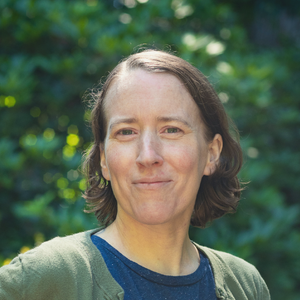
75: Weaving Your Quilt of Connection
With Stacey Lindsay, Journalist + Editor
Have you been feeling more lonely lately? In this episode, I talk with Stacey Lindsay about finding the beauty of nurturing heartfelt connections at any age and:
• The small decisions you can make to center yourself more fully in your own life
• Following your own timeline for relationships, work, and personal growth
• Why it’s important to be open to the beauty and joy around you
Stacey is a multimedia journalist, writer, and editor who focuses on civics and culture, with a lens on issues that affect people who identify as women. She’s interviewed hundreds of public figures and civilians for TV, digital, and print publications. She’s the author of the new book BEING 40: The Decade of Letting Go—and Embracing Who We Are, and a senior contributing editor for Maria Shriver’s Sunday Paper.
Keep in touch with Stacey:
• Website: https://www.staceylindsay.com
• Instagram: https://www.instagram.com/staceylindsay
Resources Mentioned:
• Being 40 by Stacey Lindsay: https://bookshop.org/a/63892/9780593831199
• The Wild Edge of Sorrow by Francis Weller: https://bookshop.org/a/63892/9781583949764
• Highly Sensitive Person by Dr. Elaine Aron: https://bookshop.org/a/63892/9780553062182
For more deep conversations like this, join me in Sensitive Circles - a cozy online community for highly sensitive people to find meaningful connection and deepen self-awareness at their own pace. More details: https://www.sensitivecircles.com
Thanks for listening!
You can also follow "SensitiveStrengths" for behind-the-scenes content plus more educational and inspirational HSP resources:
Instagram: https://www.instagram.com/sensitivestrengths
If you have a moment, please rate and review the podcast, it helps Sensitive Stories reach more HSPs!
This episode is for educational purposes only and is not intended as a substitute for treatment with a mental health or medical professional. Some links are affiliate links. You are under no obligation to purchase any book, product or service. I am not responsible for the quality or satisfaction of any purchase.
Episode Transcript
Stacey Lindsay 0:00
And that's when I realized I'm lonely. I missed my deep, intimate friendships, but I also miss that community, which is just seeing people at the store, passing by your neighbors, that kind of feeling that you're involved. I didn't have that yet here. And it was tough. It was tough. And then it was also pretty cool, I have to say, though, because I thought, okay, I need it. This is something I can change.
April Snow 0:29
Welcome to Sensitive Stories, the podcast for the people who live with hearts and eyes wide open. I'm your host, psychotherapist and author April Snow. I invite you to join me as I deep dive into rich conversations with fellow highly sensitive people that will inspire you to live a more fulfilling life as an HSP without all the overwhelm. In this episode, I talk with Stacy Lindsay about the small decisions you can make to center yourself more fully in your own life, following your own timeline for relationships, work, and personal growth, and the beauty of nurturing heartfelt connections at any age. Stacy is a multimedia journalist, writer, and editor who focuses on civics and culture with a lens on issues that affect people who identify as women. She's interviewed hundreds of public figures and civilians for TV, digital, and print publications. She's the author of the new book, Being 40: The Decade of Letting Go and Embracing Who We Are, and also a senior contributing editor for Maria Schreiber's Sunday paper. And just a reminder that this episode is for educational purposes only and is not intended as a substitute for treatment with a mental health or medical professional. Let's dive in.
Stacey Lindsay 2:06
Thank you, April. So, so proud and happy and joyful to be here with you.
April Snow 2:12
Same, same. So grateful for this moment of connection and to talk about your new book. It's really exciting. But before we get into that, I do want to ask our starting question, which is if you'd be willing to share more about how you discovered that you're highly sensitive.
Stacey Lindsay 2:28
I love this question so much. And so thank you for asking it of me and thank you for asking it of so many people in the past too. And I wish I could pinpoint a moment because this knowing has been transformative in my life. And it has given me such a sense of clarity and peace and knowing and a closeness to myself. So I wish I could say there was a moment, but I do know that it has been a collective journey, particularly over the past decade, where I started accumulating knowledge and awareness. And thanks to some incredible experts out there who are doing the work and are underscoring that this is not just, oh, don't be so sensitive. This is a true thing that many of us in humanity have and live with and experience. And it's a beautiful thing. I think of books I've come across. I'm thinking of Elaine Aaron's book right now, of course, the highly sensitive person. A fun moment, though, I can pinpoint the first time I came across your work. And that was a big deal for me. I remember exactly where I was. I was in LA. I remember exactly, it was about six years ago, and it was in a magazine. It was an article featuring your work. And I remember that was an unlock for me. So I'm so, so grateful to your work and the conversations you and I have had over the past, you know, years, several years. So all that to say, it's been this beautiful journey of accumulating this knowledge that I'm not broken, you know, there's nothing wrong with me. It's okay. And then with that knowledge, using it to help me live in a way that is really caring for my soul and my heart and my body in a way that is that we're all worthy of, right? And the last thing I'll say on this too, which has been so fun about this past sort of decade plus of learning about hypersensitivity, is it's allowed me to go back in time and connect dots too. And I think about April, when I was in elementary school, I would go into the bathroom and go into a stall and close the door behind me. And I would lean my forehead against the stall and just breathe. And I still remember the feeling of the cold elementary school stall door, the way it felt on my forehead. And I was nine years old. I was 10 years old. And at the time, I remember thinking with my limited vocabulary then, but thinking, what's wrong with me? Why is this too much? Why do I need a moment? And now I realize I was a growing sensitive person. It's so, yeah, it's been a long journey. And I'm really grateful for this awareness and having this vocabulary to describe it.
April Snow 5:21
It really shifts everything. And you're right that there's this knowing all along. We may not know exactly what it is, but we have a sense of something's different about me. And usually it translates into a narrative of what's wrong with me. How can I change? But when we have the language, the framework of, oh, this is a trait that a third of the population was born with, it really can shift how we see ourselves. Like, oh, I was probably overstimulated and I needed a moment. And look how wise I was to take myself to the bathroom and regulate. We don't see it in the moment like that. We have to gain some experience first and look back and rewrite the script. Yeah.
Stacey Lindsay 6:02
And of course, I remember so much of the narrative was sensitivity meant fill in the blank, but it was usually a negative word. Sensitivity meant, you know, don't be so sensitive. It meant weakness for a long time in my life. Sensitivity meant you're boring or something's wrong with you, or so many things that were not emboldening to a person. And I also felt as though to be sensitive, it was mutually exclusive, meaning that you couldn't be sensitive and also ambitious or powerful or funny or you know, all these things. You were sensitive, and then oh, that just kind of knocked out everything else. Right. That's that's not true.
April Snow 6:43
No, it's not true. We have so much capacity and you know, reading your book, seeing your story, getting to know you over the years, you are an true embodiment of an HSP living well, right? You thank you. You are living this really rich, full life, you know, being a reporter and then traveling and writing a book and you living a very full, beautiful, connected life. And it's like, oh yeah, that is possible for us. It's possible. Yeah.
Stacey Lindsay 7:08
And then we just fill our toolboxes more and more, right? My toolbox is a lot it's brimming now than it was 10 years ago or 20 years ago. Yeah. Right.
April Snow 7:18
And yeah, so much more is possible. So, you know, we talk about a lot, you know, the how we have this pressure to change ourselves and we have to reclaim our sensitivity. And as highly sensitive people, we often are thinking about others before ourselves. We want to do things right, we want to fit in, we want to make others feel comfortable. So we get caught up in those shoulds of life. And I want to read a passage from your book to start us off. You speak so eloquently about breaking free of that trap. And so I'll show the book for folks watching, being 40 out today for folks who are listening to this on the day this podcast is coming out. And in the book, you're speaking through the lens of gender patriarchy in this passage, but I so related from an angle of sensitivity as well. So I think folks listening are going to relate to it from a few different angles. So I'm going to read this passage. This is on page 39. It isn't ingrained in us to lose ourselves, to feel second, to quiet our voices. The idea that we can resist and break free from the tug of always following suits first seemed like an unfathomable dream. But when I talk and I write about it, I feel stronger, I feel clearer. We can shift ideas and spread new patterns of thinking and living. This felt so empowering to me to read. Like, yes, we can. So I'm wondering if you could share a little bit more about your journey of starting to think and care for yourself differently over the years.
Stacey Lindsay 8:41
It started so much in just knowing that it was a possibility within relationship to myself. Yeah. For people in this world, this is a big, exciting, bold world that is gorgeous and also very mean. It is filled with possibility and also filled with limitations. There's just a lot of polarities that all of us, whether we're sensitive or not, were trying to literally live and also thrive in this world. And so I say that because for so long, I used to think that I had to change big, massive things that were outside of me in order to feel safe or in order to feel worthy or accepted. And it's taken me a long time to realize no, these shifts, and a lot of them are really small, are within myself first, and then second, really within the reach of my arm to who I'm spending time with, the words I'm using with myself and with other people, just the daily rituals and practices that I have, certain boundaries that I have in my life too, that are within reach of me, because also considering we have to work, we have to feed ourselves, there are a lot of things we do have to do and in order to again live in this world. And so it was small but steady too. And it again started with the fact that I actually can make changes and I can start to really work to let go of things, to then feel a little bit more power, personal power, freedom, and also joy, April, too. You know, just just opening up more room for joy because life is so hard. And this is this is work. I think it is the work of our lives. I think it's the work of everyone's life. I do speak specifically to those of us who identify as women. I hope this speaks to people, though, across the gender spectrum and across the spectrum of just how anyone does live their life too. But yeah, it was just in decisions. It was in small decisions. And one of those decisions, to give an example, is I wanted to start really looking at the things, the stories that had been making me feel so damn bad for so long. So less than, so not worthy, so like I was behind, or I had to explain why I did do some things but didn't do other things, and you know, why I don't have kids, or if I've accomplished enough in my career, or why, you know, am I not married yet? And I that's a big part of this narrative because when I entered my 40s, I was not married and wasn't sure if that was something I was gonna do or not. I am married now, but why that was such a marker by which I felt like I was judged. And so I started really, really doing the work of interrogating these stories and then talking with other people about it. And what I ultimately found is that these are stories, these are manufactured ideals, and they hurt so many of us. And again, this is not one and done. I am actively doing this work every day, but it just helps to know their stories, they're manufactured. And again, within the context of my own interior life, and then again, my own immediate sphere, I can start to feel better.
April Snow 12:05
Yeah, you can start to look at well, what you have control over, but what's important to you. Yes. We can use the outside world as our compass, but what if it's not aligned? What if it's not what I actually want? And reclaiming that, like, no, I love how you say within arm's reach. That is such a palpable visceral feeling of like, oh, right, what isn't within my arm's reach? Right. Yeah, yeah, yeah.
Stacey Lindsay 12:30
That alignment, that's beautiful you bring that up too, because that is that's another thing that makes us feel so oh my gosh, am I behind? Am I late? What's wrong with me? If it doesn't align with these big macro, perfectly neat stories. Right. Yeah.
April Snow 12:43
And how could we all be on the exact same timeline?
Stacey Lindsay 12:47
I know, I know.
April Snow 12:48
Conceptually, it doesn't make sense. Like, no, we're all moving at our own pace. Like some of us get married in our 20s, some of us get married in our 60s. It doesn't matter.
Stacey Lindsay 12:58
Yeah, it's like, what's the right timing for you? It's so silly, but I just have to, it might sound silly, but this is coming up for me right now as I think about college. And I think about I never, I was never the type in college that like to party a lot and really late. And I'm a social person too, which is interesting. I'm highly sensitive and I love people. I just know that special dance that I have to do in my life to kind of keep myself feeling good and healthy. But in college, what do you know? Right? Your brain's not even formed yet. And like I just remember feeling again, something was wrong with me because everybody was at these parties and these rager parties, and there is beer and all this. And I wanted to leave by 10:30. And a lot of times I did too. I mean, nowadays I can't even imagine staying up till 10. No. But uh, and so I just kind of going back to my younger self with tenderness, like, oh my gosh, the things that I didn't know, but the ways I felt like I was again broken or going against the grain because I wasn't fitting into this macro idea. And that's one of a million examples.
April Snow 14:01
Exactly. No, I can relate, always feeling different than everyone else, you know, being in college and gravitating towards older people or younger people, never feeling like, oh, I'm right where I need to be. And it's hard because you're looking out and like, well, everyone's, you know, drinking alcohol and partying till 2 a.m. And I just want to be curled up in my bed.
Stacey Lindsay 14:20
Yeah.
April Snow 14:21
I know. I know. Well, and if you're someone, because I also am someone, I don't, I'm not extroverted, I wouldn't say, but I love connections are really important to me. Community is really important to me, always has been. And so like, how do you find community and connection at that time when this is the avenue to do that? Yes, it gets really difficult. Yes, the isolating.
Stacey Lindsay 14:42
It does, and also too, but it's it's quite beautiful as we grow and deeper into our adult years. I still find that's the case too. And I love the work you're doing in these conversations to know again that you can have community and you can build community and connection, and it can be in unique ways that maybe aren't mainstream, I guess.
April Snow 15:02
You know, exactly. It's so true. There's alternative ways of living and being and connecting.
Stacey Lindsay 15:07
Yeah.
April Snow 15:08
It might not be the primary narrative that we see, but there are so many people living alternate stories.
Stacey Lindsay 15:14
Yeah.
April Snow 15:15
Yeah.
Stacey Lindsay 15:15
Yeah.
April Snow 15:16
So as we become more of our authentic selves, we start to push those narratives away. We start to look at what's in within our arm's reach. You know, this naturally shifts the quality of our connections oftentimes. And I'm going to refer to the book once more. You know, you talk about the beauty of finding your husband Christian. And I just want to read a passage about this as we move into your journey of connection in this decade of your life. You say something really, really powerful. As Christian and I dated, I realized it was the first time I wanted to lean in with someone and offer more than the caregiver, please, everyone, part of me. I think we can all relate to that. I wanted to take care of myself and speak up. And you know, there's this fantasy, this misconception. I think that, you know, when we have a strong partnership like that where you can be your full messy self, that that's enough. But, you know, we need more than that. We need friendships, we need community. And, you know, a strong partnership, it actually is, it can be the springboard. It's the confidence booster, it's the safety to go out in the world. And you share beyond that, you share this really sweet story about a time you were feeling lonely after getting married, which most people would think, well, you're married, you shouldn't be lonely. You have everything you need. Yeah. Another misconception. But I'm curious if we could talk about what you did to solve that problem, if you wouldn't mind sharing that story.
Stacey Lindsay 16:41
I love talking about this because this is hard to talk about, too. And I don't think we do talk about this enough. And one aspect of this that speaks to hypersensitivity in particular, too, is we can feel really lonely when we're in the company of other people. We can feel really lonely at an office work party. We can feel really lonely when we're married and when we're happily married, which is the case for me. And we can feel lonely in other social settings too. So, and then as you said as well, I think there's we need different relationships in our lives. And I love, I quote her in the book, but Marissa G. Franco does a lot of work around this. She's so fantastic around friendships and the different layers and different types of friendships, too. That really, really spoke to me. How for those listening, she talks about, you know, an intimacy, like a real deep intimate, either with a partner or a best friend, and then more of a community and then more relational relationships. And just it to me, I envisioned sort of a quilt, like there's all these different threads making the quilt of who we are and what we need in our lives. But yeah, it was it was fascinating because what happened after my husband and I got married, we were living in San Francisco at the time, and we decided we wanted a life change. Absolutely love San Francisco so much. And we do still have some incredible friends there. But we were feeling we wanted a little bit more space, we wanted to change, and we wanted to take an adventure with each other too. And so it actually aligned where I work remote. I work for myself as a journalist, but he actually got a job at a company based up here in the Pacific Northwest, where we are now. And we thought, let's take the leap, let's do it. And I got up here and we were again living in right in the city in San Francisco in the mission. And that was becoming also hard for me, too. There was a lot of the noise, and I didn't have immediate access to some greenery that I was realizing was really important for me as a sensitive person. So we moved up here, and we do have physically more space. We have a little more access to nature, but I didn't know anybody. Right. And so it was wild. I found myself the first few months crying a lot, and I couldn't figure out why. Yeah, I was also deep in at the time, I was deep in editing my book. So the work I was doing was very, very, very solitary. And April, I could not, I was like, what is going on? And that's when I realized I'm lonely. And I was lonely for friends. I I miss, I missed my deep, intimate friendships, and a lot of them are in San Francisco, but I also miss those relational, you know, friends and that community that again Marissa G. Franco talks about, which is just seeing people you know at the store, passing by your neighbors, that kind of feeling that you're involved. I didn't have that yet here. And it was tough. It was tough. And then it was also pretty cool, I have to say, though, because I thought, okay, I need it. This is something I can change. I know if I'm feeling this way, other people are. And sadly, we know loneliness is an epidemic these days. Um, and so I thought, okay, I gotta, I gotta do this. I just want to at least know some people in my area, and then I can work on building these relationships, but I just want to know my community. And so I decided, like, but I thought, how does one meet people? You know, how do you do it? And there's a lot of different ways, but in this situation, I thought, you know, I'm gonna open up my house and have a women's tea. I'm just gonna take a big risk, put myself out there. I do want to say I'm in a situation where it felt very safe to do that. I think in certain situations, it might not feel safe to invite strangers into your home and it could look it could look differently. But I did. I wrote little note cards, I put them in people's mailboxes in the neighborhood, and I said, I'm having a women's tea. If you want to come by for five minutes or two hours, come by in this day, have a cup of tea, and let's just be together. And people showed up over 12 people. Yeah, yeah, yeah. I was showed up. I was like, that's amazing. I know, I know. And so it was just, it was vulnerable, it was goofy. I felt like I was in Girl Scouts again. I was at night huffing and puffing, walking and putting, you know, these little note cards in mailboxes. But people showed up and it was wonderful. And so it just showed I again, we all want to be with each other and it looks different for each of us, but we want community.
April Snow 21:14
We do. I mean, yes, the world has shifted and some places are safer than others, but there are a lot of places that community is right there with in our fingertips. And it's just a matter of taking that step to putting a note in a mailbox.
Stacey Lindsay 21:27
Yeah. And knowing too that there again is nothing wrong with you if you don't have that community. That's it. That's the other aspect of it too, because for so, so long, yeah, I would think of the different scenarios in movies. You know, we can picture them the four or five women that get together at the perfect little bistro and are just baked in. Or if you're going for a walk by yourself and you look in the window and you see friends gathering and you think, wow, they have it. What's wrong with me? I felt that so many times. And so to know there's nothing wrong with. You like again, life is tough, and sometimes it just does take that little bit of risk to reach out and be vulnerable. Yeah. And the other thing I'll say in that too is I love Francis Weller. He's a psychotherapist and an author. I knew you would Leah. He's just does a lot of work on grief. Yes. And I had the beautiful honor of interviewing him. And he said, if you're lonely too and you don't have that immediate community, go outside and hug a tree or talk to a tree. Go outside and be with the birds.
April Snow 22:30
And I loved that. Love that. There's other ways to connect to feel comfort, safety. Yeah. I love that. Because there is, I see this a lot with my clients that when there's a lack of friendships or loneliness, it's especially in later stages, 40s and beyond, there's a lot of shame around it. Like, oh, I've done something wrong, or I'm not worthy of friendship. And a lot of times it's circumstance. You've moved, you've changed jobs. Maybe you had a child and you got disconnected from your circle. There's a lot of reasons we find ourselves without connection. And there's always an opportunity to make new friends. I love my grandmother, is in her mid 80s and she still makes new friends. So I love those stories. I love those. It gives me so much hope. Like it's okay, any time of life you can make a new connection.
Stacey Lindsay 23:19
And I love that you mentioned that too, because you can make a new connection anytime in life. And I think you can go back to or anew, you know, come back together with somebody you haven't seen in a while. Because there have been those instances where again, somebody might move, somebody might have a child, and your frequencies and your schedules are just off. Somebody might be struggling in a relationship. And that's been the case for me in the past where I shut a lot of people off and I didn't even realize myself how much I was struggling. And then you come back. There's seasons to relationships. And that gives me a lot of hope knowing that now.
April Snow 23:54
That's absolutely true. Having just finished editing my own book, it was about a three-year process. And there's also some life circumstances happening at the time. And I lost a lot of connections there. I didn't nurture them in the way that I normally would. And just in the past few months, I've started reconnecting and putting intention into those friendships again. And they have started to come back to life. Yeah. And it's always possible. Yeah. It is.
Stacey Lindsay 24:18
Because I think our capacities for just understanding it, you know, just understanding the it, the life, all of it. It's it's exactly we need to realize our capacity for that in ourselves and other people is so much bigger and stretchier than we realize.
April Snow 24:32
It's so true. It we I think there's a lot of finality that we put on relationships now, whether it's romantic or friendship, platonic. And it's like, well, relationships are malleable.
Stacey Lindsay 24:41
Yeah. Yeah.
April Snow 24:42
And they're very resilient.
Stacey Lindsay 24:44
Yeah.
April Snow 24:45
And we can always pick up on those threads we've sat down. I love that quilt metaphor. It is a quilt. We're just always connected. Yeah. That's beautiful. I'm really curious. I don't know if you touch on this in the book, but what happened after that initial tea party?
Stacey Lindsay 25:02
We're we have a amazing group text. I love that. It's so great. And it's it's been and it's so cool too. Because I remember, I do think I included this in the book. There was a scene before when I started to realize I was really lonely. And before I reached out and put all those notes in people's mailboxes, I remember seeing these women walk by. Yeah, you're house. Yes, I did. Yeah. And I remember I just wanted to throw myself in front of them and say, I swear, you know, I'm cool. Let's be friends. Right. And now it's so cool that those women walk by and they came over, you know, and I wave and now I know them. But it's it's lovely because we're on a text chain. I'm definitely feeling very close to a few of the women, other women, they're all incredible humans. They're all incredible humans. Some of us are on different frequencies for different reasons. But there is this kind of invisible thread. It's just nice that there's a safety to it too, that we all know each other, we're close by, we're we have this community. It's been really, really fun.
April Snow 26:01
Oh, I love that. It's very hopeful and inspiring. Like that if you see something happening, you can be part of it. Yeah. You can take an action, we can rewrite the story. Yeah. I love that. It was, it just brought me a lot of joy to read that story. Oh, I'm so glad. I'm so glad. And so, you know, this is all part of showing up for yourself, making space for your needs, being vulnerable, taking those risks. And in the last chapter, you shared this really beautiful reframe about shifting from, you know, caring to others, which we as women and as sensitive people empaths, we do primarily, especially in the first few decades of our life before we unwind those stories. And so you say, you know, ask yourself the question, how can I soar? So I'm curious, how are you currently supporting yourself to soar?
Stacey Lindsay 26:50
I aim to ask myself that question every day. And that's a big part of it. I've missed the mark a few times, you know, we get busy and whatnot, or we get tired, or we get overwhelmed. But I've been asking myself that question or a similar one, just how am I genuinely feeling today? How do I want to feel too? And what do I want? Massively hard questions for me, and I think for anybody, right? To really, and for women too, because again, we serve, we care, we love the community before ourselves. Yes. So I would say the big part of that is just asking myself those questions, trying to every day, and then just checking in with myself. The answer is going to be different every day, of course, depending on how I'm feeling, what I need, what's exciting me, what's saddening me, what's scaring me. But a big consistent thing that I've been doing to allow myself to soar and to continue working on letting go these expectations and these stories and really declaring who I am. It's been taking care of my health, my emotional, physical, spiritual, mental health. And again, in very accessible ways. I'm very, very careful when I talk about health and write about health, because I feel as though there's been incredible reporting and journalism around health in general. But sometimes I think it can skew a little privilege sometimes because we don't have health insurance in this country and it breaks my heart. So the actual, you know, act of getting help around our health and support can be inaccessible for some people. And so I really like to shed light on some ways that, at least for me, are accessible ways that I can care for myself that you don't need health insurance for and you don't need copious amounts of money for in a doctor on speed dial for. That's right. And it has been as best as I can eating well, like getting eating really, really well, drinking water. It's so simple, but drinking water, making sure if I can get enough minerals, really making sleep a priority if I can. And then also taking care of my health is putting boundaries up at work that I'm able to. And that changes too, according to what your job is at the time and how stressful your day-to-day work life is. But right now I'm able to actually really put boundaries around what the hours I check email and when I'm on social media too, and really knowing when I can shut down. And um and that's all really helped me take better care of myself so then I can work on the other stuff to let myself exactly.
April Snow 29:31
It's setting the foundation. Yeah. Right. It's the and my clients always are surprised. It's the smallest, simplest thing that makes the most impact. Yep. Especially for us highly sensitive people, because we respond more to the subtle. Yeah. And that is quite a gift that we have. That's something really minuscule, like I'm gonna drink more water, actually has a profound effect, not just on our physical health, but possibly our mental and emotional health. So it really is those basics. It is well, nourishing your body, moving your body, hydrating, getting enough sleep. Yeah. So important. Yeah, those things that don't cost a lot of money.
Stacey Lindsay 30:07
Getting outside too. Of course, I'd love ideally if people could submerge themselves in nature, but that might not be the case. And that might not appeal to everybody, too. It could be a walk outside in the city, too. But if you can get outside and just look up at the sky, that's a big one for me because it reminds me that all the things I'm fretting over, so many of them don't really matter in the grand scheme of things. It's true. And there's something bigger and divine, whatever that is, whatever your belief system is, there is something bigger than us. And that can be a real that cares for my spiritual well-being too. It's just to look up and go, okay, okay.
April Snow 30:46
Yeah, it's true. That's something I often do. Yesterday I was just using that practice of oh, the sky was so moody and there was rain coming in. I was like, Oh, this is so magical, and I'm seeing the hills. Of course, I live in a very beautiful area. I'm blessed to live in the Bay Area. I think anywhere you have clouds and sky and some trees, and you can access something beyond yourself, which is so important to have that anchor point. It doesn't have to be religion, it could be, but it doesn't have to be. But yeah, nourishing all those parts of yourself is so important.
Stacey Lindsay 31:15
Yeah.
April Snow 31:16
Love that. Yeah.
Stacey Lindsay 31:17
And I like it also because I want to feel proud of myself. That's another part of this journey that I'm noticing more and more that I want to do things that make me proud. I want to treat myself in a way that makes me proud. I want to treat others in a way that makes me proud. And part of that is caring for myself in this way and doing these small things.
April Snow 31:42
Gives you some esteem. Yeah. It does.
Stacey Lindsay 31:45
Yeah.
April Snow 31:46
Because you're saying that question. How do I want to feel when we put ourselves at the center? Like, oh, I'm okay. Look at me. And it does. It feels really good to pour back into ourselves after so many decades of not doing that.
Stacey Lindsay 31:59
Yeah. Yeah.
April Snow 32:00
And then you get to see the ripple effects of that. Totally. Yeah. It impacts everything. It impacts everything. Exactly. Well, Stacey, if there was a last message you could share with folks who are listening, maybe they're in their 40s, maybe not, but they're on this journey of living more authentically, of taking up space in their own life, maybe feeling like they're behind, even though they're right on time. I'm curious if there's a message you could share.
Stacey Lindsay 32:28
That there is no calendar. We're often told that there is a timeline and there's not. It's your timeline. I hope for people to feel an urgency, not against this manufactured idea of what a life should be, but an urgency to get closer to themselves today and do the things that really are meaningful for them today and tomorrow and next week, but not to put that on hold, you know, in service to other ideals or other expectations or other boxes we feel like to have to check. I hope we can reallocate our energy toward the urgency of what makes a life good for me. Because there is no one way to live a life. There is an infinite, endless, colossal eclectic spectrum of what it means to live a life and to live a good life. And what it means for me is different from what it means for you, April, and what it means for somebody listening to everyone listening. And so I think it's just knowing that that yeah, each and every one of us is this kind of incredible universe. And I think we share similarities and I think we need to talk about it more. But again, we're all these sort of amazing individual universes, and you're not late, you're right on time in your life. There's nothing wrong with you, I don't say. And I don't know you who's listening, but I know there's nothing wrong with you. You are incredible. And I will also say, too, that open yourself to beauty. That's been another big thing for me. Every single person in this life deserves beauty. And beauty can look different and feel different. And I ultimately think it means just feeling this vitality, you know, and feeling this aliveness inside of us and feeling that, and knowing, I should say, that beauty is not something that needs to be performed or satisfied according to some ideal. It's something so personal within us. And so opening ourselves up to whatever that feels like for each of us has been such a moment of sort of unlocking for me. And I wish that for everyone.
April Snow 34:42
Thank you. I'm just soaking those words up. Such beautiful permission slips to live our lives in a way that supports us in following our own timeline, our own path, our own instincts. You know, we're all, you're right, that we're all connected, but also individuals. And we have to find those little adjustments for ourselves. And yeah, there's beauty everywhere. That's the best part about being highly sensitive, is we'll notice all those little moments of beauty. We also have like a little collection of just trinkets and yeah, snapshots. It's the it's the best. Yeah.
Stacey Lindsay 35:19
And it's, you know, this is all making me feel this too is that I want to have a good time. Like I want to, because again, I know we've said this, we've touched on this many times in this conversation. It's tough out there. It is tough out there. We're, you know, facing a system that is not set up to support so many different types of people, particularly highly sensitive people. And there's all these other things, you know, surviving in this very expensive world and facing these stigmas and these institutions that are so heavy. Um, and so where and when we can find the joy again and have a good time, and is for me as a highly sensitive person, that means going to bed, you know, getting in my comfy clothes early and laughing, you know, and watching the TV that makes me feel good. And I'm going toward that more too.
April Snow 36:08
Yes, let's embrace joy.
Stacey Lindsay 36:10
Yeah.
April Snow 36:12
Oh, it's such a good reminder. You know, I see joy as resistance, as life force, it's everything for me. And it's free, it's everywhere. Yeah, we can access it at any moment if we're looking for it.
Stacey Lindsay 36:25
Yeah.
April Snow 36:25
Yeah. Beautiful. Well, Stacy, thank you so much for this conversation. Always a joy to connect with you. And before we go, I'm wondering if you could share a little bit more about your new book, Being 40 with listeners. It's out today. Yes. April, thank you for your support.
Stacey Lindsay 36:40
Thank you so much. And yes, being 40 is about this wild, messy, hard, eclectic, complicated decade that is our 40s. But more so I would say it is an exploration of being a woman today and being a person today, really. And looking at all of these stories and these expectations that have for so long held us back, held us back from our truth, held us back from living the lives that we want, and doing the work toward really interrogating those stories and letting them go and getting closer to ourselves. And the book looks at these very specific elements in our lives. One chapter is dedicated to work and creativity and career. One is dedicated to having and not having children. That is a conversation that's very personal and dear to me. One looks at partnership and friendship, and one looks at beauty, and one looks at our health. And so I go kind of take a deep dive in each of these elements in the book. But I hope it speaks to people of any age too, whether you're in your 40s, whether you're close to entering your 40s, or whether you're totally on the other side of this decade. I hope it speaks to you.
April Snow 37:55
Yeah, it was. I had the privilege of reading it early and very rich, emotional, inspiring. I could tell you poured all of yourself into it. And you did a really beautiful job of highlighting a lot of women's voices that just very impactful. I don't know how to bring my feelings out into words, but it was a book that I felt like I just wanted to curl up with. And I haven't felt that way in a really long time, where it spoke to my need for emotional complexity and insightfulness. And it was a very, very rich read. And I highly recommend it to sensitive people if you're in your 40s or not. Although I just happen to be. Thank you, April.
Stacey Lindsay 38:35
Your work has your work has changed my life, truly. So thank you so so much.
April Snow 38:40
Thank you. Thanks so much for joining me and Stacy for today's conversation. After listening, I hope you're feeling inspired to start asking yourself the questions, how do I want to feel? And what makes me sore? You can find Stacy's new book, Being 40, The Decade of Letting Go and Embracing Who We Are, wherever you get your books. You can also head to the link in the show notes. If you enjoyed this episode, subscribe to the Sensitive Stories podcast so you don't miss our upcoming conversations. Reviews and ratings are also helpful and appreciated. Check out the show notes or head to sensitivestories.com to find all the resources and the transcript from today's episode. Thanks for listening.