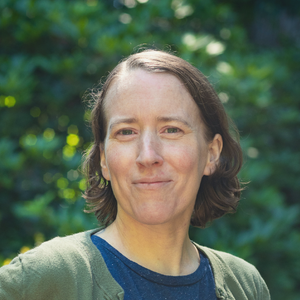
With Nick Edgar, Self-Leadership Coach
Are you outsourcing your well-being and creativity? In this episode, I talk with Nick Edgar about the impact of AI on HSPs and:
Taking action and having hard conversations to live more in alignment with your personal values
Building resilience, connection, and joy through tiny lifestyle adjustments and intentional conversations
Creating a roadmap by focusing on your habits, emotions, sensitivity, confidence, and gifts
Intentionally doing less and reconnecting to yourself on a daily basis
Being mindful not to lose access to creativity, validation, and connection to AI technologies
Nick is a self-leadership coach, helping gifted, sensitive men break free from anxiety, overthinking and self-abandonment, helping them to reclaim their authenticity and build confidence in themselves through embracing self-leadership.
Keep in touch with Nick:
Website: http://www.the3espace.com
Instagram: https://www.instagram.com/nickedgarcoaching
Substack: https://memoirsofafootballingnobody.substack.com/p/the-initiation
Resources Mentioned:
"Reclaim Your Self" with 1:1 Self-Leadership Coaching: https://linktr.ee/nickedgar
Inner Leader Lab for HSP Men: https://linktr.ee/nickedgar
3E Space Community: https://www.the3espace.com/the-3e-space-online-community
Get your copy of my new book, Big Feelings, Big Joy anywhere you get your books or at https://www.bigfeelingsbigjoy.com/book
For more deep conversations like this, join me in Sensitive Circles - a cozy online community for highly sensitive people to find meaningful connection and deepen self-awareness at their own pace. More details: https://www.sensitivecircles.com
Thanks for listening!
You can also follow "SensitiveStrengths" for behind-the-scenes content plus more educational and inspirational HSP resources:
Instagram: https://www.instagram.com/sensitivestrengths
If you have a moment, please rate and review the podcast, it helps Sensitive Stories reach more HSPs!
This episode is for educational purposes only and is not intended as a substitute for treatment with a mental health or medical professional. Some links are affiliate links. You are under no obligation to purchase any book, product or service. I am not responsible for the quality or satisfaction of any purchase.
Episode Transcript
Nick Edgar 0:44
When we outsource our well-being, we're abandoning ourselves and handing over our power to the validation of either a person, but in this case a machine and a piece of software. So I don't look at it as good or bad, but it's not real. And therefore it's not sustainable, but it feels real, which is why it's so tempting to carry on with it.
April Snow 1:13
Welcome to Sensitive Stories, the podcast for the people who live with hearts and eyes wide open. I'm your host, psychotherapist and author April Snow. I invite you to join me as I deep dive into rich conversations with fellow highly sensitive people that will inspire you to live a more fulfilling life as an HSP without all the overwhelm. In this episode, I talk with Nick Edgar about increasing resilience and joy through intentional living and authentic connection, mindful use of AI to live in alignment with your personal values, and real life ways to find the validation that you're seeking. Nick is a self-leadership coach, helping gifted, sensitive men break free from anxiety, overthinking, and self-abandonment, helping them to reclaim their authenticity and build confidence in themselves through embracing self-leadership. And just a reminder that this episode is for educational purposes only and is not intended as a substitute for treatment with a mental health or medical professional. Let's dive in the US. Same. Yeah, I'm really excited about this topic that we're going to cover. And I just want to remind listeners if you haven't already, Nick joined us for episode 73. We talked about how HSPs can benefit from taking a personal leadership role to understand your needs, to find congruence within yourself. Highly recommend listening to that. We had a great chat. And so today we're going to be expanding on that conversation by looking at authenticity and how we can hold on to that in the age of AI and how that impacts us as HSPs and has a bigger impact on the world. No small feat today.
Nick Edgar 3:23
Yeah, just you know, diving straight in as we do.
April Snow 3:28
So of course, a big fear I have two fears with AI or two big concerns. One is definitely the environmental implications that we're seeing. And two is that losing that sense of humanity, which, you know, that authentic connection, meaningful creativity, all those parts of us that make us human that AI seems to want to replace and is being talented as a shortcut for that. It's like, that's not actually what I'm looking for. And I'm sure you're seeing this in your space as well. But as a therapist, you know, people are using it as a replacement for therapy, for authentic connection, and kind of creating this unrealistic vacuum. You know, people, not just your therapist, but people in general aren't meant to be hyper-available. They're not meant to always tell you what you want to hear. You need that kind of tension and back and forth and reciprocity. And we're seeing it in lots of other spaces too, with books and media and art and you know, all the things. So I just want to open up that question of how you see AI impacting us or how you've seen it impacting your work or you personally.
Nick Edgar 4:34
Well, that's such a beautiful way to start the conversation. It frames everything so nicely. I've been on a real journey with it personally and professionally, especially over the past six months or so. I wouldn't say I'm using at the front of the queue when it comes to embracing new technology. But when something kind of becomes established enough, it tends to pique my curiosity. And then I go, okay, I'll give it a go. So earlier this year I decided to open a Substack to just do some more personal writings about my history within professional sports and how that had impacted me. And I thought I've never really done long form writing since I was at school. So here's an opportunity to explore AI from a kind of editing perspective. So what I did was I was voice noting myself, my thoughts, my feelings, using my language and ways of expression, and I asked AI. In the beginning, it was ChatGBT to be specific, just to edit it. Can you just, you know, put this into paragraphs and check it's grammatically correct and all that kind of thing? And what struck me instantly was kind of, yes, I can do that, but I can also do this, this, and this, and this, and this, and this and this and this. And I was it almost felt like this gust of energy and wind hit me.
April Snow 5:54
Yeah.
Nick Edgar 5:54
And it was overwhelming, but at the same time, it did spark that curiosity to think, well, where can I go with this? Where is this going? All of those questions that you know come up for us as HSPs, often from the simplest prompts. So shortly after that, I remained faithful to my own language and all of that, but then I started thinking, well, what happens if I start working with it as a colleague in terms of creating content? But almost immediately I started to feel the best word I can use is icky.
April Snow 6:28
Yeah.
Nick Edgar 6:29
It felt like simultaneously, as I was starting to use, I started seeing similarities with what I was also seeing online, especially in visual form. I wasn't using it for that personally, but it was like, okay, um, here's my post again, bit similar to the longer form. She says, Well, I want to write in the caption, and it would just come back with all this sort of stuff. And what I also noticed was the language that it used was very validating. You would almost always start with, This is amazing, this is brilliant. Like, I really understand what you're saying. Now, these are all things to my, especially my younger HSP self, I didn't hear very often. Especially growing up. Like, usually those kind of affirmations that I saw were received kind of sparingly, let's say. And very often it was this is too much, or go and be quiet, or can you look after yourself? All of these sort of things. You're too sensitive, the classic. So I have to admit that I felt and I didn't notice very quickly how warm that felt.
April Snow 7:35
Yes. It's it's alluring.
Nick Edgar 7:38
Yes, and there was a temptation to that. And I think this is probably where it links to the previous episode of what we spoke about and self-leadership and being able to distinguish when these parts of us come up that want to jump and start driving the bus.
April Snow 7:51
Mm-hmm. This you bring up two really important points, which I hadn't really thought about, which is one, it does it pulls on all these threads that can be overwhelming, first of all. It's like, oh, I need to be doing more and more, more, more, more. Two, right? It's very tempting to want to lean into it and use it more because it's touching that younger part that didn't have attunement, that didn't have validation, that didn't have that encouragement. It's like, and I can understand why people become attached to it, overly attached, because it's so yes, I've been waiting for this my whole life for someone to actually validate me and see me. But it's the false perception.
Nick Edgar 8:35
I mean, yes, you are doing great work, but it's not I mean, it's literally the A in AI.
April Snow 8:41
Right. Right. Oh my gosh, yes.
Nick Edgar 8:48
Oh, that's but it doesn't feel that way. Like it's very easy for it to feel authentic. That's the right the tricky stuff about self-leadership and about the parts of us, but especially in relation to AI, because I think it touches us as HSPs in the deepest of ways.
April Snow 9:05
Yes, exactly.
Nick Edgar 9:06
Yeah, we have to honor that.
April Snow 9:08
We do. I'm curious if for folks who maybe didn't listen to your other episode or haven't yet, could you speak a little bit more about that self-leadership and how, let's say, in this particular context, how does that come into play where you could take control of that situation?
Nick Edgar 9:23
Yeah, yeah. I think for me, like our internal world, especially as HSPs, are very complex, they're very layered, they're beautiful. And the more we get to know ourselves, the more we understand what that landscape looks like. So for me, one of the biggest questions, I'm not sure if we covered this in the last episode or not, is when I'm feeling something that feels very emotional and that has attachment to it, the first question I tend to ask myself is how old do I feel right now? And in this case, I felt very young, like seen, heard, validated for expressing myself. That's a very young part of me that responds to that so completely. So for that, when I notice that that's how I'm feeling and how old I feel, I know that that's a part of me, and therefore it allows me to just step away, ground myself, tune back into Nick the 51-year-old that's done all this work and all that kind of stuff, but still pay attention to that part of me, you know, metaphorically kind of put my arm round it and just send it some love and say, look, this is okay. Like we're gonna work this through together. I'm not gonna invalidate that part of me and what it needs, but at the same time, I'm not gonna let it become all of me.
April Snow 10:39
Right.
Nick Edgar 10:40
So that explains it.
April Snow 10:41
Yeah, absolutely. It's like you're well, you're staying grounded in the present and noticing what's happening here. It's my younger self is needing this, and I can take the adult part can take over and say, Yes, I'm here to I'm here to offer you this.
Nick Edgar 10:56
Exactly. Exactly, which is why developing self-awareness is so important, especially as HSPs, and especially when we are entering any kind of new arena, I think. That's when we're I'm most vulnerable because we don't have the experience.
April Snow 11:09
Yeah, we don't have that muscle memory to go off of. Right. And when you're in this new domain, you know, this technology is so new and we don't have any experience with it, we don't quite understand what's happening or how to put the guardrails up or when we need to.
Nick Edgar 11:25
Exactly.
April Snow 11:27
Because you could say, well, what's so wrong if it's validating me? But I mean, well, I'll ask you that question. What is so wrong with
April Snow 11:33
it?
Nick Edgar 11:34
Yeah, I think for me, it's it's and this isn't just applicable to AI for me. I think when we outsource our well-being, and this comes under well-being for me, uh, any state we're in at any given time, when we abandon ourselves, and that might sound dramatic, but that's what I believe is happening in these cases, we're abandoning ourselves and handing over our power to the validation of either a person, but in this case a machine and a piece of software. So it's not, I don't look at it as good or bad, but it's not real.
April Snow 12:05
Yes.
Nick Edgar 12:05
And therefore it's not sustainable, but it feels real, which is why it's so tempting to carry on with it.
April Snow 12:11
Yeah. That's the piece, isn't it? That it's not real. It's not a person in your life that you can have a multidimensional relationship with. And really, then, if we're always outsourcing that sense of validation and self-understanding, we will never find it within ourselves.
Nick Edgar 12:29
It's exactly that. Now, when it comes to creating content of any kind and expressing myself, that's a journey I've been on my whole life. I've had to build that muscle from a position of resistance, doubt, fear, all of that stuff that instantaneously almost goes away if you embrace AI, which makes me comfortable, which is often what we're looking for as human beings, safety. But nevertheless, what then happens is that muscle that I'm building starts to atrophy really quickly. It's just like if you, I don't know, if you go to the gym or you do some kind of exercise regularly, it's going to hurt in the beginning. Eventually, it's going to become more comfortable as you get used to it and you understand the parameters of what to expect. But the minute you stop doing it, you have to build that muscle again. So I think that's part of what it is to be a human being. Our capacity expands or contracts depending on what we pay attention to and the choices that we make.
April Snow 13:27
Mm-hmm. Yeah, those shortcuts, they feel good in the moment, but they only end up harmonious later. Because yeah, if when you go to the gym, you build that muscle and it's yours. You have it with you. I mean, obviously, you need to maintain it, but it's something there's a lot that happens along the way too.
Nick Edgar 13:45
Absolutely. So I think for me, it became then a real quite quickly, oh, this is actually potentially quite dangerous for me. This is something that I could outfall my power to, and therefore I need to really stop and pause and reflect and sit with it and then decide what, if anything, I'm going to use moving forwards. And I think simultaneously there were then some other aspects that came in. And I had my partner to thank for a lot of this in terms of like, you know, do you know the environmental impact? Do you know what's happening in the background? Do you know who owns these softwares? Like, yes, are they people that are in line with your values? All of these questions that are associated with it but sit in the background.
April Snow 14:29
Yes. A good good piece to the conversation. Because I mean, if we take out the emotional relational component and we just look at it from a more practical standpoint of okay, I can see how AI would be alluring for HSPs because it could help us take shortcuts. Yeah. Might write that letter for you, or create a flyer, or shorten, you know, a search that you're doing for research. So if you're someone who's easily overwhelmed, which I give so far, I was like, okay, we have created this environment which we're completely overstimulated all the time, always engage. So of course now we're thinking, oh, well, AI will save us because it'll do all this for us. And we can, but then we're focused even more on output productivity. So yes, it feels shiny from that regard. But yes, what's happening behind the scenes?
Nick Edgar 15:23
It's a really important question for each of us to ask and sit with the answers that we find. I think I think for me, I moved away from Chat GPT for some personal reasons in terms of where some of that data may or may not be going, and certain donations that were made by certain higher people in that company. And therefore that instantly just became a a no-brainer for me. I had to stop using it immediately. But I settled on I think this is good as an editing tool for my longer form writing. And therefore, I'm gonna try and find the most ethically sound that I could, and that's what I've done. And I only use it for that. I don't use it for any content now or any caption making or anything like that. And actually, I think my radar's become so attuned to it, I think all of us can probably spot it visually quite quickly.
April Snow 16:16
Oh, absolutely.
Nick Edgar 16:17
Something's AI, but the the form of language, you know, the grouping of three adjectives, the using and because, here's the thing, colon, like all of this kind of language which AI is throwing back to us that sounds really powerful and unique to what we feed into it, but actually it's servicing however many hundreds of thousands of other people in exactly the same way.
April Snow 16:43
Yes. Yeah, they're creating this cohesion's not the right word, but uniformity?
Nick Edgar 16:48
Yes.
April Snow 16:49
And not in a good way.
Nick Edgar 16:50
No, and I did, I came prepared because that's part of my HSP. Just with a couple of facts in terms of from a global perspective. Like the estimated AI data centres will use globally will consume over 900 terawatt hours of electricity, which is twice the size of the whole of France. To offset that carbon footprint, we'd have to plant some 6.7 billion trees over the next seven to ten years. There's all sorts of different metaphorical examples of what we're talking about here that's happening in the background. And that's I don't say that to scare or to worry, but really just as an important piece of the puzzle that we're talking about here. And we can all decide for ourselves how much climate matters to us. But I think as HSPs, as deeply feeling people, I'd be surprised if you don't have some interest in the climate.
April Snow 17:44
Absolutely. Especially as people who are very conscientious and can see ahead. I mean, we're already seeing the ramifications of climate change and the impact of our actions. Yeah.
Nick Edgar 17:57
Exactly. But I think, look, I also don't want to paint a picture that it's all bad and that it's not doing some good in the world. Like it's part of what I looked into also. So, you know, AI technology is being used to monitor and track endangered species all around the world. It's being used to monitor illegal fishing commercially. It's speeding up the development of certain life-saving panther medicines. It's helping people with physical learning abilities to better communicate. Like there are undoubted benefits, but I think for your average person, I think it's about how much personal responsibility do we want to take and what are we personally using it for. That's the impact that we're having personally. And I think it's good to talk about it.
April Snow 18:41
Absolutely. I'm in agreement there where there are some really important advantages of AI, especially creating accessibility for folks, you know, sorting and making sense of large pools of data for causes like endangered species and bigger problems that we have. I guess I find that we don't all have to use AI, or we don't all have to use it for everything. Like, can we be selective and mindful about the use if there are these bigger consequences? Because, you know, I can there's so many things I could use AI for, but I choose not to. And can we all make those choices for the benefit of the greater good?
Nick Edgar 19:23
Yeah, and I think so. And obviously that's a very personal thing. But nevertheless, we shouldn't underestimate how powerful our personal choices are.
April Snow 19:31
Well, that's it. Exactly. It comes back to that self-leadership, right? I mean, where we can decide the impact we're going to make and how we move through the world. Um, and I think as I see a lot of HSVs, and I've been in this boat sometimes as well, where it's so overwhelming what's happening in the world, I just I can't do anything. My actions don't have an impact. It's easy to fall into that. And here's an example where your actions can have an impact. And when all those actions collectively come together, it can make quite a significant move in the right direction.
Nick Edgar 20:04
I think so. And I think especially when it comes down, when it comes to our creativity, because I think our creativity as human beings is probably one of our most precious gifts. However we choose to utilize it and whatever that means for us. So I think having AI music composers, or you know, even this month, there was I think his name was Jerry Falade Falade, I can't remember how you pronounce his surname. He had a two million dollar advance for his first crime novel. And it's been shown to have too much AI in it.
April Snow 20:35
Yep.
Nick Edgar 20:36
Ironically, it's an AI programme that's picked up that there's too much AI in it. But there are sort of, you know, I think there's a case going on in New York around copyright issues where it's being used to train AI and all this kind of stuff. And so I think there's a kind of lack of trust there potentially as well. And trust is so important in anything, especially for us as HSPs, it's easily lost and hard to build. So I think that it's a complex issue that we all have to decide for ourselves what the right thing to do is. But it's certainly not going away.
April Snow 21:13
No, not going away. And it's true, we can move through those different layers of choice around ethics, politics, environmental impact, and choose the level that matches well our needs and our personal values.
Nick Edgar 21:30
Yeah, I think so. And I think as well, you know, there's people like us that are in service of others where the human connection is so important. But also, you know, we're living in times that economically are not particularly easy for a lot of people. Yeah and therefore can argue the rights and wrongs of all of that. But ultimately, I think there's something here about that's another reason why it's so tempting to use it.
April Snow 21:57
Yeah.
Nick Edgar 21:58
Because we need that investment for something else. We need that money for something else, and then we have to honour that too. And therefore, part of the question I think we have to ask ourselves is is doing that better than nothing? Again, I don't think there's an easy answer to that question. Um yeah, definitely been thinking about it a lot.
April Snow 22:17
Yeah, me I can tell, me too. It's I mean, as we will as HSVs.
Nick Edgar 22:24
Yeah.
April Snow 22:25
Um yeah, I think a lot of folks are really needing to think about short term solutions to survive. This is a very complicated time. And resources seem to be dwindling very quickly, at least in well, definitely in the US. And I'm sure a lot of other places as well. So I definitely have a lot of compassion and empathy for people who are just doing what they have to do to get through.
Nick Edgar 22:55
Yeah.
April Snow 22:56
Yeah. No judgment at all there. And for those of us who have the privilege and the capacity to have these conversations and to make different choices, I think it's important to talk about it instead of just watching it go by passively.
Nick Edgar 23:11
Yeah, exactly. And I think that's probably where we all have a responsibility as I see it, you know, to engage with the subject, to engage with our personal choices and to give ourselves the power to do that. And look, you can go back to the earliest humans, and innovation has already been a thing. Like, you know, some group of people somewhere decided that using flint tools was going to be more efficient to live their lives and not using flint tools.
April Snow 23:37
Right.
Nick Edgar 23:37
So innovation is part of that creativity. But I think maybe the question that gets asked less than ever is okay, we can do something, but is profit the sole driver of this?
April Snow 23:53
Yes.
Nick Edgar 23:54
Like we can do it, yes. But should we do it is a question that probably doesn't get asked, especially if there's money to be made. And I think that's one of the paradoxes of Western culture in particular, that you know, we're driven by needing to make money to live, to survive, to grow. But how do we hold on to our ethics, both personally, but also you know, in our families, in our communities, but nationally and internationally. And I think that's probably the tech evolution that we have both had the privilege to kind of see almost from the beginning.
April Snow 24:37
Yeah.
Nick Edgar 24:37
You know, in a real sense, in terms of technology coming into our homes that to the extent that it has and in the ways that it has, whereas there's at least a generation, maybe closer to two now, that have always lived with the internet or have always lived, you know, it's certainly a generation now that's lived with social media. And these are all important factors to think about as part of this debate, I think.
April Snow 25:02
Very important. You know, asking the question, yes, we can, but should we? Is really important. And we're you know, we're here, you see a lot of talk online of just accept it. It's inevitable, it's happening. Like, well, okay, it's happening, sure, but in what capacity or in what way should it be happening or could it be happening that benefits us instead of destroys us or harms us?
Nick Edgar 25:28
Yeah, and I think I think history shows us in quite horrific ways sometimes that when enough people kind of take their arms back and just go, it's inevitable, it's gonna happen. We've seen some quite horrific things happen in history as a result of that. And that is where personal responsibility and collective responsibility had the power to stop some of this happening, but it didn't. Now, look, there's no judgment about that. But I think we're in one of these times now where potentially on a national and global scale, I think I'm quoting my partner here, but it this is a time for the sensitives to rise. And to rise in a way that's empowered for them to show that there are different ways of living which are more aligned to uh humanity than purely being driven by profit, I think. I think profit at the expense of lives, but a whole range of things in between that is something that I'm very passionate about as a humanitarian as well as a human, and and I think most HSPs will have quite strong views on that. But the question of what can we do about that and what should we do, again, is a very personal thing, but it probably begins by normalizing having difficult conversations about it, and maybe even to be able to say, look, I don't know. You know, I definitely have learned a lot in the last six months. I've had my own sense of self tested in the ways that I've already described. And I think this is something which we all have a real opportunity, and I use that word intentionally, to embrace and to decide for ourselves what's right, but also to upskill ourselves and empower ourselves to stand firm in what we believe. Because even though it might feel like it sometimes, especially isn't HSP, one of the advantages of technology is we're more connected than ever if we use it intentionally.
April Snow 27:24
Yeah, we can start to have these conversations first with ourselves.
Nick Edgar 27:27
Yeah.
April Snow 27:28
Take time, look in what feels right for you and your needs and your life and your ethics. Yeah, then we can start to bring that outward, whether it's online or in our hopefully in our personal relationships, in our lives, in our families, in our workplaces. And just be that little voice, that canary in the coal mine. Yeah. Just start planting seeds for people. You don't have to change people's minds, but I think just speaking our views can have a big ripple effect.
Nick Edgar 28:00
Yes. And we have to have the capacity to do that, especially online, because I think online debate tends to be very binary and are we right or wrong in how we talk to each other?
April Snow 28:11
Yes.
Nick Edgar 28:12
And there's not a lot of room for nuance, which is why I think community is important and solidarity of people that we can then share our experiences with, whether that's a professional or a friend or a family member or a partner, whoever that might be, or combination of all of those, ideally. Because it is important. We have to have the resilience to be able to be disagreed with. And I think that's probably the hardest thing. Plus, I think as HSPs as well, because we generally have really strong levels of empathy. It's so easy for us to abandon ourselves and our own viewpoint because we can so easily understand those of others that disagree with us.
April Snow 28:51
Right. Yes. I'm often in that bind. I can always see both sides. And it's easy to talk yourself out of your own beliefs because of that empathy. Yeah.
Nick Edgar 29:01
Very much so.
April Snow 29:02
Very much so. So you're saying we have to have enough resilience and regulation to have the conversations, to especially when people disagree with us, how do we do that?
April Snow 29:16
Well, that's the $64,000 question. Because I know people are out there listening, like, well, I just don't have that capacity.
Nick Edgar 29:25
Yes. I mean, I mean, I can only speak broadly from personal and my professional experience, but something that I do day in, day out is I don't start my day by looking at my phone.
April Snow 29:37
Yeah, right. Big you know, big change.
Nick Edgar 29:40
I now, and I know again, this might be a privilege that not everybody listening has, and I accept that. But for me to start to curate my day by tuning in with what's going on, some breathing, some focused meditation, some journaling, if I need to, I often pull cards to see if there's anything bigger than myself that's guiding me in terms of what I need to be focusing on that day. There's a whole range of things that I do to try and start the day as robustly as I can as an HSP. Now, some days that's easier than others, but nevertheless, throughout the day, being able to check in with myself, how did this experience affect me? Is there a residue here that if I don't take that five minutes or even 60 seconds sometimes, or even just a deep breath if I can, I might carry that residue on with me. And then by the time I get to the evening, I'm just exhausted. It's all rolled up in a big elastic band mess. And I just, you know, I'm acting it out literally. That's how it feels, you know, that's how it feels. So the how I think is different for everybody, but probably the common strand to that is what are the ways that allow me to ground myself so that all things being equal, I can approach what I am doing throughout every day as much me as I can possibly be. And we use the term early in the conversation energy leakages. Note where the leakages are, like where are the people, places, things, subjects that I'm gonna have a big emotional reaction, that is gonna I can almost feel energy draining out of me and therefore start there. So I think it's both. I think it's building capacity, but try not to allow leakages.
April Snow 31:31
Mm-hmm. That makes a lot of sense. Because you're right that the pathway to come back home to yourself is different for everybody. Yeah, it could be prayer, it could be pulling cards, it could be time in nature, it could be chopping vegetables, it could be doing formal meditation. But the most important part of that is building a relationship to self that's offline, that's tangible and tactile and real. And that space will show you the way. Okay, what residue do I need to clear out? What leakages do I need to seal up and hold on to? Who am I? What do I believe? What conversations do I need to have with people in my life? Everything starts to come clear. And you mentioned earlier that you know there are two generations now, nearly that don't know a world without technology, phones, social media, AI, even. And it can be hard to find that more what is it, analog world. But as you and I both know, there's such a value in that. You know, having grown up without a I remember the day we got a computer when I was in high school, and I was like, yeah, there I didn't know what to do with it at the time, but now I always long to go back before that day because there's such a richness in that quiet. You know, you just kind of come back to real life, the tactile world.
Nick Edgar 32:59
Yeah, yeah. I think it's where we're paying our attention to and the ability to be present with ourselves. Some of the I mean, being bored is almost a skill now. It is well, you know, sitting with boredom.
April Snow 33:12
People online, they like force themselves to be bored for an hour. It's like, yeah, that was my life as a kid.
Nick Edgar 33:19
Yeah, but but it also what it did was it created well, it literally created creativity.
April Snow 33:25
It did, absolutely. That's where I dreamed and visioned and you know, made forts and did all kinds of things, made books out of cardboard, like all kinds of things happened.
Nick Edgar 33:36
Exactly. And I think that therefore building time in wherever you can to almost tune into that, something my partner and I do every single day, is and we're lucky enough to have this within walking distance, but just go and feed the ducks. We've seen them grow from babies to near adults now, and same with swans, and we saw a peregrine falcon the other day, which is amazing. It's and nature's big for almost every HSP. So these are ways to ground. You know, it some ways to ground do cause discomfort, and we have to learn that's how we build capacity by sitting in the discomfort. But let's not forget that some of the ways to ground are also really pleasurable.
April Snow 34:18
Yeah.
Nick Edgar 34:21
Feel like hard work in an already busy life.
April Snow 34:24
Yes, exactly. Yeah, it's like you can gain pleasure, joy, you gain resilience.
Nick Edgar 34:31
Yes.
April Snow 34:31
So when we get out of that echo chamber of validation of being in, you know, chatbot or whatever it is, the AI system, it's like, oh, you find yourself, you strengthen yourself, you get clarity, and it can be fun and enjoyful.
Nick Edgar 34:47
Yes. And I always say, whenever I can make something fun and joyful, it sits so well with the discomfort of doing the more harder things.
April Snow 34:56
Yeah.
Nick Edgar 34:56
You know, journaling can often feel like a slog if I shine that lens on it. Like I'll sit there with the page, it's like, oh, I don't know what to write. But then it's like, okay, well, if I just start drawing, what does that do? Oh, thoughts come up, things happen, and that's the point about being present. So I think very often the blockages and the patterns that we have in our lives feel insurmountable. And I want to honor that, that's real. But very often, when we pay attention to it and explore it with curiosity, we find that maybe it's not as fixed as we believe it to be. I think that's really important to challenge the assumptions that we make about ourselves and what we're capable of. And that's why I think the discussion in relation to AI is so important, because I think often we outsource because we think I'm not capable.
April Snow 35:51
Exactly. We have that doubt come in.
Nick Edgar 35:54
Yes.
April Snow 35:55
Yep. And yeah, we can forget that we are capable and we can get there on our own. Yeah. There's so much value in coming back to self. There's so much to learn there.
Nick Edgar 36:09
I think it's the safest place that any of us can learn to make home. But it's often the place that none of us were ever taught how to spend time in and with.
April Snow 36:20
Yeah, especially now, you know, there's this constant dizzyness and tethering outside of ourselves.
Nick Edgar 36:26
Yeah.
April Snow 36:27
And, you know, I I find this is something I'm always coming back to and relearning that there's so much available to me that I forget to tap into. And I always say, like, I have the toolbox, I don't choose to use the tools at times. But like we were talking earlier, like just going to the library or going to see the ducks. You could easily not do that. Yeah. But if we can choose what's available to me, you may not have a lot of access to nature. But yeah, do you have an access to a library or a park or anything that you can find a sense of peace and can create a bit of a container for self-reflection?
Nick Edgar 37:06
I think so. But I think it's also I'm really passionate about, and I'm glad you said it. And I think we both have at different times during this conversation. Like all of us are fallible as humans, no matter how much learning we do, no matter how much experience we gain, we forget things, we stop doing things we know are good for us. Like that is part of being a human being. Hopefully, we get better at that as we go older, you know. Otherwise, there's nobody know what me and you are doing. But nevertheless, when we catch ourselves having slipped into an old way of being, it can be so easy to cast the veil of judgment on ourselves and double down on those feelings.
Nick Edgar 37:44
There's initial, oh no, I should have known better, or why have I stopped doing this? Now, what I'm gonna do is I'm gonna shame myself for that.
April Snow 37:52
Yeah.
Nick Edgar 37:53
And I think one of the most lovingly self-leadership things we can do is catch ourselves at that crossroads and then flip the switch into compassion. It's okay that I forgot to do the thing, or it's okay that I've stopped going to the gym or whatever it might be for you. Because I can start again now. And I can start rebuilding that muscle. And I think that's so important as part of this.
April Snow 38:17
Yeah, just that permission to be human, to be messy and perfect. I always remind myself it's okay to come back to something again and again and again. Like my yoga practice I've done for 25 years, but I've probably come back to it 25 times. Yes.
Nick Edgar 38:33
Absolutely.
April Snow 38:34
I completely agree. For a long time, I would write my journal. Oh, I've I would shame myself. And then I was like, you know what? It's okay. I've let that go. I'm like, you know what? I'm just restarting now and I'm making space for that.
Nick Edgar 38:47
Exactly. Ironically, I think very often people think of coaching as it's a way to get support and accountability to achieve goals, to do more, to be more.
April Snow 38:59
Right.
Nick Edgar 38:59
And that can be true. But I think for me, my approach, especially as an HSP, is often where do we need to be doing less? Yes. Where do we need to be creating space? Where do we need to be tuning into that compassion and kindness and cultivating self-worth, which builds confidence rather than we need more discipline and we need more structure and we need more all of that other stuff. And that's why I think meeting, and I know you'll resonate with this part, meeting somebody where they're at and understanding well why are they there in front of me in the first place, and being able to walk in their shoes and understand what their experience is on its own terms before you even think about anything else is so important. And I think that's the interpersonal relationship is something that AI can synthesize, but it's not a two-way thing. AI can't be vulnerable with you, it can't have an original thought, it can't create anything on its own that hasn't already been created. And that's why I think it's so valuable in a way that it will never be replaced.
April Snow 40:12
Absolutely. It doesn't have that nuance at reciprocity. Because yes, it feels great to be validated, but it also feels really amazing to see someone else and to have that energetic exchange and to have someone who knows your story and all the nuances of it, and sitting right beside you when something really beautiful or really devastating happens, you can't replace that.
Nick Edgar 40:36
No, no, not at all. And that's why I think it's so important to think about the relationships that we do have. Our familial relationships, our friendships, what environments we spend time in, even if they're just acquaintances, that can have a big effect on us. As HSPs, without a doubt. You know, I think about it in the context of things like sports teams or social clubs or all of these things matter because they all have cultures and they're all going to give or take energy from us in different ways. And I think very often we feel that we have no influence over some of these relationships in our lives. Now, every relationship, whether it's one-to-one or group, you know, everybody's invested in that from their own perspective, of course. But never forget that we have an influence on it, even if we feel like we don't. And I think it's hardest often within our own families or long-standing friendships or places where we have often through no choice of our own entered a way of being that feels really difficult to start to change. So I think a lot of the work that I do in a coaching capacity is to really encourage people to explore that.
April Snow 41:47
Yeah.
Nick Edgar 41:48
Because we're always changing and evolving, even though some things remain the same. And we can take ownership over that whenever we choose to. But again, it sometimes we just feel like we can't, and that's okay. But it's also not true.
April Snow 42:02
Right, right. You have more power, influence, say, than you might think.
Nick Edgar 42:08
Yes, yes. Very often recovering that.
April Snow 42:12
Mm-hmm.
Nick Edgar 42:13
Sometimes also it's not an in-the-moment thing. It's not always an in-the-present thing. It might be recovering something energetically from a relationship that's ceased. I think there can be a lot of power in that. I think it's really important to just think about that self-awareness of what's occupying my time and really getting to know your beautiful complex self as it is.
April Snow 42:37
Yes.
Nick Edgar 42:38
And I think then if you can kind of bring that leadership perspective to it, that's when you can start to really create and cultivate your world internally as well as externally.
April Snow 42:51
Right. You start there and you build that foundation and then move outward.
Nick Edgar 42:56
Yeah, by building that capacity, by saying, honestly, uh, you know, I don't know why, but I'm always thinking about this thing or this person. But actually, I don't do anything about it because I feel like I can't. Or maybe maybe there is a reason why I can't, I don't know. But you can always work with your internal experience. And I think starting there is really important.
April Snow 43:15
Oh, I thousand percent agree. I think that is the place to start, is in inside. That's the place you have the most influence and you know the best or will know the best. It's the first step, absolutely. Yeah.
April Snow 43:28
Well, Nick, as we start to wrap up, I'm wondering, is there any final thoughts you have for HSPs listening who want to start that journey inward, who want to live more authentically in the moment?
Nick Edgar 43:41
First, I want to raise my hands in the air and cheer you on because I think it's the most courageous thing any of us can do, but especially as an HSP. So whether you are, you know, a young HSP or whether you are, you know, in your twilight years, it doesn't really matter. It's always available to you to start to explore who you really are. And that's the way I like to phrase it. That phrase that you use, that coming home to yourself, coming home to your authenticity, cultivating more of a life that you desire and you deserve. I think it's incredible. And it doesn't have to be a big grand gesture. We often think it does, but it doesn't. Very often it's in the tiny adjustments. Five minutes here, five minutes there, a new book picked up, you know, and a new club explored.
April Snow 44:33
Yeah.
Nick Edgar 44:34
Very simple things can have such a profound impact on us. That's the beauty of who we are. But I think simultaneously also bringing Building the capacity to hold what comes as a result of those experiences, good, bad, and indifferent. That's so important. And I think very often, certainly from my own experience, as a younger man, I'd often arrive at a point where I felt I had the energy, the will, the confidence to step out and then just get overwhelmed. Just go, oh, that's a bad idea. How are you going to do that? And there's a phrase I used, kind of safe inside my fortresses, which I then ended up doing without meaning to. I ended up creating a world for myself that was so small because I didn't believe I could ever develop the capacity to step out into places where who I am and how I naturally want to be isn't necessarily welcome. But now I know I can do that. That for me is just as important as anything else. I deserve to have a place in the world, as me, gloriously so. And I don't need everybody to be okay with that. I can I can hold somebody not being okay with who I am, and I can choose how much they then are in my life. But I think the more we become ourselves, the more we tend to find out people.
April Snow 45:59
Yeah, absolutely.
Nick Edgar 46:01
So I think for me it's just a curious, never-ending journey. Just start. Tune into your heart and just start. And if you have started and stopped, that's okay. You can start again anytime you like. And there are so many people of different kinds out there who are there to support you.
April Snow 46:20
Ah, it's beautiful. It's such a good reminder that first of all, the little micro changes or micro experiences, five minutes here, five minutes there, make such a big impact for HSPs. My clients are always so surprised, like, oh, I made this one little shift and everything feels different. It's like, yes, we are so impressionable to our experiences that you don't need a lot. And it's a building block. Start small and then you'll slowly build up to being more resilient, more open to conflict, more getting out of your comfort zone, trying new experiences. We don't need to start there though. It's the building of the stuff.
Nick Edgar 47:00
Not at all. I mean, if you if if there's anyone listening out there that wants kind of more specific guidance or like a roadmap of sorts, the best I could probably offer would be to try and focus on five areas. Focus on like your habits. It's a good place to start. Focus on your emotional experiences, especially anything that's triggering you or activating you. Explore your sensitivity. It's such a key part of who you are. Look for ways to grow your confidence. Maybe have a difficult conversation with a friend and let them know you're gonna, you know, you want to explore something that's challenging for you, or with someone that can help you, like me or you, you know, to practice that. And then I think fifth, really explore your gifts. Now you might say, I've got no gifts. I used to say I've got no gifts. What I mean by that is do something that lights you up. Whatever that might be, a walk in nature, pick up a pen and draw a picture, like whatever it might be, just explore something that could become a gift. And all of those five things are kind of my baselines because they're easy to think of examples where oh, there's something tangible in front of me I can actually work on here.
April Snow 48:14
Right. It provide I like that you I think you said roadmap and it yeah, it provides some direction because otherwise it can be really overwhelming. How do I start? What do I focus on?
Nick Edgar 48:23
Yes.
April Snow 48:24
Okay, here are some specific ways that you can start to look inward and transform your experience as a sensitive person in the world. Well, Nick, thank you so much. I always love talking with you. I know it's only been twice now, but very rich conversations. If folks want to connect with you, I'll share your website and resources in the show notes. But before we go, I'm curious if listeners are wanting to work with you one-to-one or in group coaching, could you tell them a little bit more about that?
Nick Edgar 48:53
For sure. I mean, I have a group coaching program called the Inner Leader Lab, which is actually ironically touches on those five themes, but it explores kind of using somatic practices, mindset tools, how can I begin to you know expand my toolbox to work with these different areas of my life. I generally work with people for around about six months one-to-one. And that is about coming home to yourself. And it might be in the context of career, or it might be focused around relationships, or maybe it is, I want to go into business for myself, but I feel really nervous. I'm not sure if I'm ready. So it might be all of that. It might just be a you know, a whole, I'm kind of drawn to step into my glorious kind of HSPness. So it's very individual, as as I think we touched on the podcast. For me, it's about meeting someone where they're at, walking with them to help them become more of who they already somewhere inside them know they're capable of being and feels more authentic and powerful to them. They know what that is already, and I just help them find it. That's probably the best way to describe it.
April Snow 49:57
I love that. You're really meeting people where they are, you're seeing them and helping them get to where they want to go. You're not coming in with an agenda, which I think is so beautiful.
Nick Edgar 50:07
No, not at all.
April Snow 50:09
Because some coaching programs are more rigid in that way.
Nick Edgar 50:12
For sure, which is why I think again we touched on this earlier. Like, you know, there's the kind of more traditional grow model, smart goals, where we know where we want to be, and we're going to help you get there. Some of my clients have those ambitions and those goals, but some it's more exploratory, and those things actually present themselves through part of the process. Those are always my favorite clients to work with because it's a joy for them to discover that.
April Snow 50:35
Yes. It's funny, you know, thinking about my therapy work, it's so rare that what the client identifies that they want to work on in the beginning is actually what we end up working on.
Nick Edgar 50:45
Exactly.
April Snow 50:46
You just have to get in there and look and see what's really happening. Exactly. Well, Nick, thank you so much. This is again such a joy and honor to get to talk with you. And I always think appreciate what you have to say and what you're doing for the HSV community. So thank you so much for being here today.
Nick Edgar 51:02
Right back at you, April. It's a real pleasure, and I absolutely love who you are and everything you do in the world.
April Snow 51:08
Wonderful. I hope we'll do this again soon.
Nick Edgar 51:10
Who knows?
April Snow 51:17
Thanks so much for joining me and Nick for today's conversation. I hope it inspires you to make a small adjustment to how you're supporting yourself and to realize that your actions make more of an impact than you think. If you're interested in working with Nick for one-to-one or group coaching, head to the link in the show notes. If you enjoyed this episode, subscribe to the Sensitive Stories podcast so you don't miss our upcoming conversations. Reviews and ratings are also helpful and appreciated. Check out the show notes or head to sensitivestories.com to find all the resources and the transcript from today's episode. Thanks for listening.