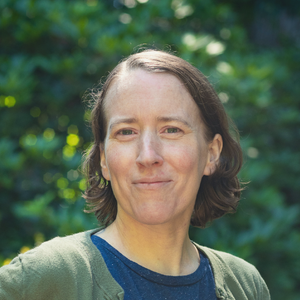
73: Finding Congruence Within Yourself
With Nick Edgar, Self-Leadership Coach
Do you abandon your own needs? In this episode, I talk with Nick Edgar about living authentically as a highly sensitive person and:
• Taking a personal leadership role to understand your needs and treat yourself with compassion
• Rediscovering your true nature after being a late bloomer
• Showing up for yourself without sacrificing connection
Nick is a self-leadership and emotional agility coach, helping gifted, sensitive men break free from fear, over-giving and self-abandonment without numbing out, burning out or selling out. He coaches them to reclaim their authenticity and their sensitive superpowers.
Keep in touch with Nick:
• Website: http://www.the3espace.com
• Instagram: https://www.instagram.com/nickedgarcoaching
Resources Mentioned:
• Sensitive Movie: https://youtu.be/IrRwgYyjxQg
• 3E Space Community: https://www.the3espace.com/the-3e-space-online-community
• Inner Leader Lab for HSP Men: https://mailchi.mp/the3espace/illjan26
For more deep conversations like this, join me in Sensitive Circles - a cozy online community for highly sensitive people to find meaningful connection and deepen self-awareness at their own pace. More details: https://www.sensitivecircles.com
Thanks for listening!
You can also follow "SensitiveStrengths" for behind-the-scenes content plus more educational and inspirational HSP resources:
Instagram: https://www.instagram.com/sensitivestrengths
If you have a moment, please rate and review the podcast, it helps Sensitive Stories reach more HSPs!
This episode is for educational purposes only and is not intended as a substitute for treatment with a mental health or medical professional. Some links are affiliate links. You are under no obligation to purchase any book, product or service. I am not responsible for the quality or satisfaction of any purchase.
Episode Transcript
Nick Edgar 0:00
It feels like no one else is experiencing what you're experiencing. My inner world would be very judgmental and ask myself, what's wrong with me? How do I fix this? How do I become congruent with the version of me that's gonna allow me to thrive in the environments within which I live?
April Snow 0:26
Welcome to Sensitive Stories, the podcast for the people who live with hearts and eyes wide open. I'm your host, psychotherapist and author April Snow. I invite you to join me as a deep dive into rich conversations with fellow highly sensitive people that will inspire you to live a more fulfilling life as an HSP without all the overwhelm. In this episode, I talk with Nick Edgar about reuniting with your needs as a highly sensitive person and coming back into alignment with your authentic self. Nick is a self-leadership and emotional agility coach, helping gifted sensitive men break free from fear, overgiving, and self-abandonment without numbing out, burning out, or selling out, coaching them to reclaim their authenticity and sensitive superpowers. For more HSP resources and to see behind-the-scenes video from the podcast, join me on Instagram, TikTok, or YouTube at Sensitive Strengths, or sign up for my email list. Links are in the show notes and at sensitivestories.com. And just a reminder that this episode is for educational purposes only and is not intended as a substitute for treatment with a mental health or medical professional. Let's dive in.
Nick Edgar 2:13
As I look back now, and it's easy to look back with hindsight, I think I probably recognized a high level of intuition and sensitivity from being a young boy, but I wouldn't have connected to that in the way that I do now. The first thing that led me to it was the film sensitive.
April Snow 2:31
Yes.
Nick Edgar 2:32
Which may be true for lots of other people as well. And that was around the pandemic. So I'm quite a late bloomer as far as being introduced to what it is to be a highly sensitive person. But for me, it was so impactful that film, and then reading the highly sensitive person, you know, Elaine Aaron Ron's book, that it was just like, well, this is like looking in a mirror.
April Snow 2:52
Yeah. Yeah, you it's like there I am, I am on the page on the screen.
Nick Edgar 2:57
Yeah. In actually the normalization of that, I think. Because for so long I'd lived my life asking myself in relation to a lot of these beautiful traits, what's wrong with me?
April Snow 3:09
Yeah.
Nick Edgar 3:10
As opposed to celebrating and leaning and stepping into that, which is what I try and do as much as possible now. Because it is beautiful. It's a gift.
April Snow 3:19
Oh, it's such a gift. If we can set aside the messages we've heard and say, oh, there's a lot of assets here. There's it's okay to be more sensitive, more emotional. So you always knew, okay, something is a little different. Yeah. But then around the pandemic, you realize, oh, there's a name for this.
Nick Edgar 3:40
Yeah. Just that there's a whole world and a whole group of people out there that have had their own version of the experience I just described.
April Snow 3:48
Yeah.
Nick Edgar 3:48
And are talking about it and are connecting with each other because of it and validating each other's experiences, which is really powerful.
April Snow 3:59
Yeah. It's incredibly powerful to feel that sense of connection or not aloneness.
Nick Edgar 4:04
Yes.
April Snow 4:05
It's so important.
Nick Edgar 4:07
Because I think, especially as, and this is just my lived experience, but especially as a man, I didn't grow up in environments where any of that was normalized, not just by men, but also by the women in my life. You know, the usual things you might hear growing up, you know, big boys don't cry and all this kind of thing. And especially being in high sports performance, which is what I grew up in. I think I found myself having to mask those traits and often resented them because they didn't fit the environments within which I was growing up. And I think we all can probably resonate with that to a certain degree as highly sensitive people. The world isn't necessarily built for us. But at the same time, I think we're certainly right now, we're needed more than ever.
April Snow 4:53
We truly are. And that resentment piece is very relatable. I hear a I feel that myself, or I hear it from others. It feels like it's a limitation sometimes, or that it's holding us back. But for me, it's only if I try to live others' expectations.
Nick Edgar 5:10
Exactly. Exactly that.
April Snow 5:12
Yeah. So did you feel like, oh, this sensitivity is holding me back from being the athlete I want to be or the man I want to be? Yeah.
Nick Edgar 5:21
I wouldn't necessarily I wanted to be the version of masculinity that I was being modeled. I don't think I ever felt that that was something I aspired to be. But I recognized that if I could behave as that version of masculinity, I was likely to be more successful. And I think the validation and the praise and moving on in that environment, the more I behaved in that way, the more of all of that stuff I got. And we all seek connection, we all seek validation. But it also caused a real deep internal conflict within me that took me quite a number of years into my 20s and 30s to resolve.
April Snow 6:07
Sure. So you're then getting all these accolades on the outside. You're kind of keeping up, you're doing what you're supposed to be doing. But inside, something very different is happening.
Nick Edgar 6:18
Oh, the lack of one of my favorite words is congruence.
April Snow 6:22
Yeah.
Nick Edgar 6:23
When what's happening inside me, as layered and chaotic as it might feel sometimes, is how I am behaving outwards and is reflected in the relationships that I have. I feel great. Even in challenge, it feels real and I feel connected. But when there is a difference between those two things, and that especially when that difference is big, that's when I feel closed off and I struggle. I struggle with deep loneliness, with an inability to connect. And that resentment you spoke about festers and grows because it feels like no one else is experiencing what you're experiencing.
April Snow 7:05
Yeah, you feel so alone. Yeah. Like, am I the only one that's living this?
Nick Edgar 7:12
I think so. And because of that, that's why my inner world would be very judgmental and ask myself, what's wrong with me? How do I fix this? How do I become congruent with the version of me that's gonna allow me to thrive in the environments within which I live? And I could never marry those two up. Yeah, you're I try every way.
April Snow 7:38
Yeah, they don't fit.
Nick Edgar 7:39
No, I don't think anybody can do that.
April Snow 7:43
No, we can try. And I see people uh hurting themselves so much to try to fit into that box, to wear that mask, however you want to put it.
Nick Edgar 7:53
Yes, and I think that's a big part of the passion that drives me to do the work that I do now. The developing the skill set and belief and having the right support systems around us in order to really bloom as who we naturally are is such a freeing experience that I'm still on that journey and will never stop. But it's the weight of all of those expectations, whether they come from society, family, you know, social circles, whatever it might be, having the courage, and I think it is courageous, having the courage to say I am different, and I'm gonna get curious about that, and actually I'm gonna walk a path instead of resentment and worry and regret and fear, I'm gonna try and lean into empowerment and authenticity and connection because of that. I think that's the transformational change that I've been through that I hopefully offer a facility for those that I work with to have their own version of that.
April Snow 9:03
Yeah. Yeah. I mean, that's what we want for people, right? To be in alignment with their true selves. So you're walking through the world as a highly sensitive man, not understanding quite why you experience the world the way you do. And then something clicks or shifts or starts to shift right around the pandemic, you discover Elena Aaron's work. So when do you start to feel, though, that shift from incongruence to congruence? I know you're still there, but is there a moment where you start to feel like, oh, something's different? I'm a little bit more in alignment.
Nick Edgar 9:36
It was definitely, it was a couple of years before that. I think for me, high sensitivity was almost like the glue that bought all the pieces that I'd put together before that, that just made it go, ha, here's the picture. So but it was through a lot of suffering. It was. I think I what I found in therapy was an ability to make sense of what had led me to the point I was at. And I really value my therapeutic journeys, has been more than one, to allow me to do that. But I wouldn't necessarily say it gave me the tools and the skills to live in the present and build a better future for myself.
April Snow 10:16
Yeah.
Nick Edgar 10:18
So I think one of my lowest periods was probably about 12 years ago when I was really struggling and I didn't quite know where to go next. And I went with a different kind of therapist that was more integrative and more in the moment, and probably had more of a coaching approach, which allowed me to, and I think I was ready for that. I don't think I was ready for that beforehand.
April Snow 10:40
Yeah.
Nick Edgar 10:41
Um, but that moment of, if I'm honest, it was quite early in this particular therapeutic journey. And when you're creating that relationship with a therapist and you're speaking a bit about your backstory, quite early on, this particular therapist felt comfortable enough and obviously saw that I was comfortable enough to have mirrored back to me after I was, you know, speaking my truth and speaking my story. That they said, having got my consent, I just want to reflect one thing back if that's okay. And they said, What's the common denominator in all of these stories that you're sharing with me?
April Snow 11:17
Yeah.
Nick Edgar 11:18
And I had this beautiful, it was a really almost like warm duvet blanket feeling of it's me. And I think that transitional point of that's not to take responsibility for things that happened to me that were troublesome, but I think there comes a point where we have to take responsibility for our own lives. And I think when you reach a certain point in your growth, development, healing, whatever words work for you, that kind of call to action of personal responsibility. Okay, if I want things to get better than this, if I want to really connect to a version of me that feels truly real, I have to pay attention to that. And not just in a therapy session once a week, but all the time every day. And I think that realization in that moment allowed that therapeutic journey to be incredibly powerful, which then took me into a real kind of exploration of what do I really like? What kind of clothes do I really like? Do you know what I mean? How do I want my hair to be? All of these simple things that maybe we take for granted, but often can be influenced by forces outside of ourself. So I just started there with this almost childlike joy of what's new? Who am I really?
April Snow 12:39
I just got this image of you entering your body for the first time.
Nick Edgar 12:45
I love, thank you for that reflection. That's really beautiful. It's exactly that. I'd learn to live my life from the neck up, but as highly sensitive people, I mean, trying to keep all that in is not easy.
April Snow 12:57
It's a full-time job.
Nick Edgar 13:01
It really is.
April Snow 13:02
I can relate because I lived the first 20 years of my life from the neck up, yeah. And it was a slow dropping back down, and it was messy, but also beautiful. Yes. And I just feel emotional hearing your story, just knowing that, oh, you finally found yourself. And like the eyes of a child, like everything is new, and you get to, okay, what do I like? Who am I?
Nick Edgar 13:25
Absolutely. Absolutely. Which is why I really love associating with the term, like I really consider myself a late bloomer. And I've worked now with people that are older than I am now. I'm 51 now. And people far older than me are having their version of that. There's also people that are having that incredibly younger. And I think it can happen to all of us. It's available to all of us at any time, however we might feel about ourselves and what is possible for us. I really have come to believe that deeply in my core.
April Snow 13:58
Absolutely. You can find yourself at any decade of your life. Yeah. 51, 71, 91.
Nick Edgar 14:04
Absolutely.
April Snow 14:05
It's all available.
Nick Edgar 14:06
Yeah, it is. It is. But I also know what it is like to generally feel like that isn't available to me. And that I'm going to be in a life of struggle because of who I am. And I'm going to adapt and I'm going to create a life which is less than because that does create a certain comfort within oneself.
April Snow 14:29
Yeah.
Nick Edgar 14:29
But it's an illusionary comfort. And actually, it's something which, as I'm saying it there, I can feel younger versions of me kind of connecting to them and because of what they lived through, because they thought that was all that was here that was available for them. And there is a sadness to that. And I like to honor that in the present.
April Snow 14:50
Yeah, there's a grief there. The younger versions of you, the younger parts, didn't feel this congruence that you are living now.
Nick Edgar 14:58
Exactly. But rather than when I feel them come up, rather than feeling their sadness, I can I really resonate with the term reparenting. I can bring them forward into the present with me and show them what's possible now.
April Snow 15:11
That's it. That's it. Yeah. I was telling my clients, you know, whenever something comes up, it's an opportunity to heal, to reclaim that experience of wholeness, of healing. It's like, oh yeah, the younger self is here. Let's help them have a different experience.
Nick Edgar 15:29
And that term reclaim, that word reclaim is really important because it's not that with all of this exploration, we become something new or someone new.
April Snow 15:38
Right.
Nick Edgar 15:39
We become who we were always here to be.
April Snow 15:43
Yes. That is exactly it. Like you were always this. It was just hidden or unavailable.
Nick Edgar 15:52
Yeah.
April Snow 15:52
Maybe you were in survival mode.
Nick Edgar 15:54
Yeah, well, and I have no doubt if you're listening to this, you have your own version of that where for whatever reason, whatever happened to you, in big and small experiences will have put certain layers up. Which is why I often think about you know the work that I do as and my own personal work is peeling back those layers. It's by peeling back those layers gently and safely that allows what has always been there within to feel safe enough to show itself to the world.
April Snow 16:24
Yeah, it's true. It's like just letting it come to the surface when that safety is there. And you mentioned your work a couple of times. So I want to give you a moment to share about that. How do you do that in your own work with clients, where you help them maybe find that sense of safety or unmasking? What does that look like?
Nick Edgar 16:44
So I take a person-centered therapeutic approach. So I did some training towards training as a counselor and psychotherapist, which allowed me to develop those active listening skills, summarizing, reflecting back. And I believe in meeting everybody that I work with exactly where they are. And for some relationships that happens really quickly, and for some relationships that takes time.
April Snow 17:05
Yeah.
Nick Edgar 17:05
So I think it starts with being able to hold space. And a part of me struggles with the term safe space because it's not for me to say whether the space is safe or not.
April Snow 17:14
True. Yeah.
Nick Edgar 17:15
But I believe it's about the space being safe enough for that person and those parts of them to step into that experience. And so it's a dual responsibility and it's very relational. And I think it's one of the skills that we have as HSPs that we can offer the strands of connection. And if the other person uh can receive that and feels ready to do that, it's very powerful.
April Snow 17:47
Yeah, it's definitely a gift we offer being able to see people so deeply, who they are, what they need, how they're feeling.
Nick Edgar 17:55
Absolutely, absolutely. But there's something for me about the relationship between high sensitivity as a set of traits to how we experience our inner and outer world in the present. And one of my favorite words is appropriateness. Does all of that feel appropriate for us? But we also carry with us all of our experiences, good, bad, and indifferent, which have an effect on how we process our inner and outer world. And I think these things can get blended together. So for me, through curiosity, I try and allow the client to decide for themselves which is which. Now, a lot of my clients will have already gone through a therapeutic process, so they have a level of self-awareness where they might understand that they have younger versions of themselves that can pop up in the present, and some of them might have awareness around trauma. And I think all of that's great, but you also don't have to have that to sit in a room with me. But mostly I think it's about when you can become the observer of these things and more and create that experience within yourself. That's when I believe that the self-leader in you emerges. It's the observer, it's the part of you which is the most precious and most real that exists within all of us. That when we connect to it, we can create that beautiful separation to observe ourselves and be compassionate towards ourselves rather than being blended and in all of this, which can feel overwhelming.
April Snow 19:37
Yes. Okay, this is crystallizing this for me. So if I am in my self-leader, I'm kind of in my true self where there's a clarity there, I'm observing, I can see myself and my needs. I'm not blending with kind of the outside world or what I think I should be wanting or needing. Do I have that right?
Nick Edgar 19:59
Yes. So you may have an awareness of that.
April Snow 20:01
Yeah.
Nick Edgar 20:02
But you're not connected and blended with it.
April Snow 20:05
Right. I can kind of see it from a distance, or I have like some healthy separation from it.
Nick Edgar 20:11
I think, yeah, healthy separation is a great way of looking at it.
April Snow 20:14
Mm-hmm. Oh, I love that. That's really clear. Can you tell me more about this self-leadership? Because this is a new term for me that I didn't discover until we connected. So can you describe what more a little bit more about what that means or what that looks like in practice? Yeah.
Nick Edgar 20:31
For sure. So for me, for me, the word self is really powerful. That we spoke about authenticity and how important that is for us as highly sensitive people. So we get to decide for ourselves, um, if we give ourselves the privilege and the freedom and the opportunity to do so, to decide, well, who am I? What are my values? If I strip away what was given to me and what's influenced me and what might be the residue of things that have happened to me, what lies below that?
April Snow 21:01
Yeah.
Nick Edgar 21:01
When we can start to build a picture of that, I think we start to be able to connect with it. And somatically and emotionally, we can decide for ourselves whether that feels good and therefore might be true for us, or maybe doesn't. And sometimes part of that beautiful journey is thinking things we think are true about ourselves actually turn out not to be. That's so true. Yes. Similarly, the opposite's true. So it's being open to all of that. And I think that for me, that part of ourselves has always been there. It needs to be nurtured and grown and worked on and has to have the opportunity to live and breathe in order to fully actualise and become all of that in the world. And that isn't easy for any of us, especially as highly sensitive people. But as I said, when we can do that, for me, self leadership allows us to understand the parts of us which are working within us and can be affected by what's happening outside of. That aren't part of that core.
April Snow 22:02
Yeah.
Nick Edgar 22:03
Now, for me, it's important to say they're just as beautiful and worthy and important here. But nevertheless, starting to gain a distinction between all of that allows us to walk with all of it more true to ourselves and maintain more of that authenticity, even when it's challenging, because that's important.
April Snow 22:27
Yes.
Nick Edgar 22:28
Rather than being subject to these experiences and these parts of ourselves that aren't necessarily part of who we are, wanting to jump in. So, you know, if we think about common challenges of highly sensitive people, such as sensory overwhelm, emotional overload, present itself in outburst.
April Snow 22:52
Yeah.
Nick Edgar 22:53
That was really common for me. And how I perceive things can change in an instant. A common one for me is often restaurants. So sometimes I can be incredibly present with my partner who's sitting opposite me. Sometimes all I can perceive, as hard as I try, is their mouth moving, and I can hear almost every conversation on all the other tables and a roller dropping some forks over there.
April Snow 23:21
Yeah.
Nick Edgar 23:22
And if for me, what I've learned is that if in that particular situation, in that particular example, some of that is sensory, and some of that is to do with me being a highly sensitive person.
April Snow 23:34
Right.
Nick Edgar 23:34
Also, part of it is to do with a younger version of me that felt whenever I was growing up and was taken to restaurants and things, which wasn't that often, I'd have to be on best behaviour.
April Snow 23:45
Right.
Nick Edgar 23:45
Then my hyper-vigilance of how I had to be and all that kind of thing. So when I go to a restaurant, which is maybe new for me, I now know through self-leadership, I can check in with that part and be more present, hopefully, with my like now, than I would have done otherwise before I was aware of that. So these are the kind of tools, if you like, of self-awareness that can allow us to be more present in our lives in circumstances where maybe we've said, Well, this is just who I am because I'm an HSP.
April Snow 24:14
Right. But there's more to the story.
Nick Edgar 24:16
Yeah, it's true, but it's not the whole truth necessarily.
April Snow 24:19
Right. It's a yes and exactly.
Nick Edgar 24:22
Exactly. And you get to decide what's true for you. That's the important and the empowering thing here.
April Snow 24:29
It is empowering to be able to unhook from the idea of I will always be overstimulated in any restaurant. Yes. Versus, oh, sometimes if the noise is high enough, I may be. But if I've had a good night's sleep and I'm aware of that story of being a kid and being told to be perfectly behaved, if I can pull some of that away, I might actually be able to relax a little bit and have a different experience.
Nick Edgar 24:54
It's exactly that. Because when we make judgments about ourselves that are limiting, then we are quite literally putting up a boundary of what's possible for us. And again, just to reiterate, for all sorts of reasons, that boundary may be true for you, and that's okay. But you get to decide that. But it's only through the expiration that I think you can make that determination.
April Snow 25:22
Right. Right, exactly. Being careful to put on absolutes, like I am always this or I'm always that. Well, well, maybe. And you might sit with yourself in restaurants a few different times, realize, no, no matter what, noisy restaurants aren't a space I can feel grounded in or regulated in or calm in. And that's okay, but give yourself a chance, be curious first.
Nick Edgar 25:47
I think so, because otherwise the beautiful traits of what it is to be a highly sensitive person, I'm not trying to be melodramatic here, but they can become really limiting if we look at it and experience it in that way. And not just in relation to high sensitivity, but certainly on my own journey, you know, when I've felt down, if I go to GP, they might describe that as, well, that's depression. That's a diagnosis which can feel relieving and give an opportunity to take a step forward, but it can also become a reason to stay exactly where you are.
April Snow 26:22
Right. And it may not actually be clinical depression, it could be your nervous system is collapsed and it's mimicking depression.
Nick Edgar 26:30
So glad that you've mentioned the nervous system because that for me is the kind of what runs through all of what we've spoken about so far. And learning more, not just up here, but especially in here, of how our nervous system works and what stimulates it is a really important piece of this puzzle for me. Because sometimes in my sessions we don't talk an awful lot, and it's much more experiential. What's happening in your body now when you think of that version of you that you know struggles going into restaurants?
April Snow 27:05
Yes.
Nick Edgar 27:06
It becomes more than a cognitive exercise. It becomes experiential and thematic and emotional, which is all the stuff we're really good at.
April Snow 27:15
We're amazing at it, yeah. We're so attuned to those little nuances in our bodies, or we could be.
Nick Edgar 27:23
Yes, but sometimes we deny ourselves the full range of all of that because it's maybe too much or too scary.
April Snow 27:30
Yeah. We don't have the capacity in the moment.
Nick Edgar 27:33
For sure, for sure. And you know, there's a lot happening in the world at the moment, which adds to that locally, nationally, internationally. And I think as highly sensitive people, we have to really protect our energy as far as all of that goes. But I do think we can also put ourselves in a position to be able to engage with it. And I think it's important that we engage with it, all of it, what's happening in our lives, in our relationships, in our communities, as well as what's happening on the world stage. But when we think of all that together, even as I say that now, I can I can feel my nervous system going, hang on a minute, what are you doing?
April Snow 28:09
Slow down.
Nick Edgar 28:11
That's okay.
April Snow 28:13
That's okay. Yeah, it is overwhelming to think of knowing everything all at once. Yeah. And we can step into that self-leadership and take control, not just be a passive absorber of all the information, but step in and say, This is how I'm going to absorb it and this is when I'm going to absorb it. Would that be true? Yeah.
Nick Edgar 28:36
Without the doubt. And that can happen working with someone else. I think it's really powerful to learn to do some of that work yourself.
April Snow 28:43
Yeah.
Nick Edgar 28:44
So some of the things that have become part of my daily life would be things like working with my breath. How am I feeling today? And using the breath to connect to that. To understand what's true for me, to allow think about what's happening ahead of my day. Who do I need to be? Who do I want to be in all of these environments with all of these people? So before meeting you and having this wonderful conversation, I did a lot of dancing around. I wanted to connect to the younger versions of me that I'm allowed to express themselves.
April Snow 29:21
Oh, I love that. Yeah, I sat here for a moment as I did a meditation that I like to do as like a clearing and re-energizing just for a moment. So maybe 30 seconds, but it helps so much.
Nick Edgar 29:32
Yes.
April Snow 29:32
And the breath is always with us. Such a gift.
Nick Edgar 29:36
It's one of the most accessible tools that we all have.
April Snow 29:39
Yeah.
Nick Edgar 29:40
So that's a big one for me. The power of visualization, meditation. Meditation, especially from the perspective of observation, like not to clear the mind.
April Snow 29:51
Yeah, just to witness present.
Nick Edgar 29:53
Yeah, exactly, to witness it and to show all of that love, compassion, acceptance without trying to judge it, fix it, work with it, all that kind of stuff. But at the same time, when I think about things like NLP, hypnotherapy, EST tapping, they're very active exercises where we're using our imagination and seeing what our subconscious has to say about our experience. And all of this is just a beautiful part of what self-leadership is for me. It's continuing to learn what I need and answering the call of that so that I can show up for me and those around me as much as possible, as appropriately as possible, without abandoning myself.
April Snow 30:41
That's it. Coming into that congruence and just checking in what do I need, what's authentic to me. Yeah, I love that. It can be so simple just to be with yourself in that moment. Yes. Well, Nick, we have to start to wrap up. So I'm wondering. I mean, you shared so many beautiful sentiments here today. Is there any final thoughts I feel important to say before we you start to wrap up?
Nick Edgar 31:08
I definitely want to express gratitude for the conversation because I feel really wonderful having shared this space with you, April. So thank you for that. Same. I think I don't know, if you're listening to this and you're either at the start of your journey of discovering high sensitivity, or maybe you've been here for a while and you've reached a pause or a stop, or maybe you have reached somewhere where you feel like I'm not sure anything more is possible. I think leaning into curiosity, leaning into what's true for you inside, see if you can connect to your own self-leader. Does that term even resonate with you? It might not, and that's okay too. But maybe getting to know them, you know, maybe exploring your values again or for the first time, maybe. Maybe characterizing who you know yourself to be and seeing that reflecting back to you. And what does that do inside your body?
April Snow 32:02
Yeah.
Nick Edgar 32:02
All of these kind of playing with what's true for you can often create some of the biggest and best shifts that we have. And it's all very simple, accessible stuff.
April Snow 32:12
It's really true. And that curiosity piece is so important when we've had to live outside of ourselves so much. Like I always am encouraging my clients like take yourself on a date, go to the toy store, go to the craft store, go to the bookstore, go to the library, go have a cup of tea and just sit and just be with yourself. See what comes through.
Nick Edgar 32:33
Absolutely. And also to honor any of the challenges that might come up for you, from the point of even hearing the idea you just suggested to actually being there. Like that's a journey in itself.
April Snow 32:46
That's right. It's all part of it.
Nick Edgar 32:49
You don't have to do the whole thing all at once.
April Snow 32:51
Nope.
Nick Edgar 32:51
You know? And this is all part of it for me. Just that take what's the first step in front of you. Let's take that and see what happens.
April Snow 33:01
Yeah. Maybe even just think about asking the question before you actually ask yourself the question.
Nick Edgar 33:06
Absolutely.
April Snow 33:07
What question might resonate if you even were to ask yourself a question? Yeah. I love it so much.
Nick Edgar 33:13
All of all the opportunity to connect with what it is that beautifully makes you you.
April Snow 33:18
Yeah, exactly.
Nick Edgar 33:19
All of it's important, and there is no right way. There are right ways for each of us. And we get to decide what they are.
April Snow 33:28
We get to decide. Yeah. I love that. Well, Nick, thank you again. I will make sure to share all of your resources in the show notes, your website, your Instagram, your different offerings that you have for folks. Can you tell us a little bit about the men's community that you run and also your one-to-one coaching?
Nick Edgar 33:47
Yeah, for sure. So the community is actually for all genders. So I write with my partner Jess that I'm in business with. She's a highly sensitive person too. And it's called the three E space community. So our business is the three E space. The three E's being explore, energize, and empower, which is the kind of three-step process that we take all of the people that we work with on. And within the community itself, we have community events. So it might be group coaching, it might be breathwork, but we also have little villages within the community, one of which is a men's space that I run.
April Snow 34:18
Oh, I love that.
Nick Edgar 34:18
It's together once a month. Um, and on a quarterly basis, we just collectively choose an area of focus which is meaningful for us. We think about whether we want support and accountability to spend time with that, to move forward with it. And we all kind of help lead each other and grow as highly sensitive men. And then the two other main offerings that I have is I have the Inner Leader Lab, which is a group program, which is focused on really connecting to who you are, that self-leader. But the one-for-one coaching is the real deep dive. I love working with people for six months. I work with men in that particular space, highly sensitive men of all ages, but men maybe that are just feeling that call to action of I know there's more for me in my life than what I'm giving myself the privilege and the freedom to experience, but I'm feeling a bit stuck and I'm not quite sure how to get there.
April Snow 35:18
Yeah.
Nick Edgar 35:19
And it's the work that I love doing the most.
April Snow 35:21
I love it. Oh, so many beautiful offerings and spaces for people to step into, depending on what they're needing. So I'll be sure to share all of those for folks if they want to join in.
Nick Edgar 35:32
Yeah, and do connect with me as well. Please do connect with me. I love connecting with highly sensitive people of all genders.
April Snow 35:38
I love it. Thank you again.
Nick Edgar 35:40
Thank you so much, April. It's been an absolute pleasure.
April Snow 35:42
It's been a joy. Thanks so much for joining me and Nick for today's conversation. What I hope you remember is that being naturally observant as an HSP means that it's never too late to rediscover what your needs are and to show up for yourself fully. If you're interested in working with Nick for coaching or community support, head to his website, the3espace.com, or you can head to the link in the show notes. If you enjoyed this episode, subscribe to the Sensitive Stories podcast so you don't miss our upcoming conversations. Reviews and ratings are also helpful and appreciated. For behind the scenes content and more HSB resources, you can sign up for my email list or follow Sensitive Strengths on Instagram, TikTok, and YouTube. Check out the show notes or sensitivestories.com for all the resources from today's episode. Thanks for listening.