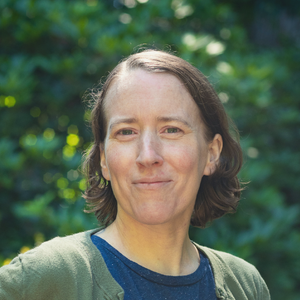
76: Sensitivity in Schools
With Dr. Kaaryn Cater
Was school overwhelming for you? In this episode, I talk with Dr. Kaaryn Cater about the impact of the classroom environment on a highly sensitive student and:
• How teachers and parents can support highly sensitive students to thrive and feel less overwhelmed
• What highly sensitive teachers can do to manage the sensory overwhelm and exhaustion from working in schools
• What strengths highly sensitive students can embody when offered the right supports such as mindfulness, access to nature, and time for reflection
Dr. Cater is an educator, coach, speaker, and researcher with more than 30 years of experience across education, coaching, and professional development. She is the founder of The Mindwise Connection and specialises in supporting highly sensitive children, adolescents, and adults, as well as the people who live, learn, and work alongside them. Her work focuses on sensitivity education, nervous system balance, and helping highly sensitive people use their strengths to thrive in learning, work, and life. Through her coaching and consultancy practice, she offers individual and family coaching, professional development for educators and practitioners, and consultancy for organisations seeking to create more inclusive and responsive environments.
Keep in touch with Kaaryn:
• Website: https://www.mindwiseconnection.com
• Instagram: https://www.instagram.com/mindwise_connection_nz
• LinkedIn: https://www.linkedin.com/in/kaaryn-cater-phd-b373103b
Resources Mentioned: Research: https://orcid.org/0000-0001-6364-9809
For more deep conversations like this, join me in Sensitive Circles - a cozy online community for highly sensitive people to find meaningful connection and deepen self-awareness at their own pace. More details: https://www.sensitivecircles.com
Thanks for listening!
You can also follow "SensitiveStrengths" for behind-the-scenes content plus more educational and inspirational HSP resources:
Instagram: https://www.instagram.com/sensitivestrengths
If you have a moment, please rate and review the podcast, it helps Sensitive Stories reach more HSPs!
This episode is for educational purposes only and is not intended as a substitute for treatment with a mental health or medical professional. Some links are affiliate links. You are under no obligation to purchase any book, product or service. I am not responsible for the quality or satisfaction of any purchase.
Episode Transcript
Dr. Kaaryn Cater 0:00
Ensuring that you're taking absolutely all the time that you need to replenish yourself in as many ways as possible. Often for highly sensitive people, it's time in nature. Make that time. In the lunch break or the recess break, go outside. Look at the sky, take some breaths, just sort of calm things down. So these are the things that we can do for ourselves in the classroom. The things that are good for the highly sensitive children are good for the highly sensitive teachers, too.
April Snow 0:42
Welcome to Sensitive Stories, the podcast for the people who live with hearts and eyes wide open. I'm your host, psychotherapist and author April Snow. I invite you to join me as I deep dive into rich conversations with fellow highly sensitive people that will inspire you to live a more fulfilling life as an HSP without all the overwhelm. In this episode, I talk with Dr. Karin Cater about what highly sensitive students and teachers need to feel supported in schools, how to increase awareness and inclusivity for HSPs in education, and specific ways to foster our sensitive strengths. Dr. Cater is an educator, coach, speaker, and researcher with more than 30 years of experience. She is the founder of the Mindwise Connection and specializes in supporting highly sensitive children, adolescents, and adults, as well as the people who live, learn, and work alongside them. Her work focuses on sensitivity education, nervous system balance, and helping HSPs use their strengths to thrive in learning, work, and life. She offers individual and family coaching, professional development for educators and practitioners, and consultation for organizations seeking to create more inclusive environments for HSPs. For more HSP resources and to see behind-the-scenes video for the podcast, join me on Instagram, TikTok, or YouTube at Sensitive Strengths, or sign up for my email list. Links are in the show notes and at sensitivestories.com. And just a reminder that this episode is for educational purposes only and is not intended as a substitute for treatment with a mental health or medical professional. Let's dive in.
April Snow 2:45
Hi Kaaryn. Welcome to the podcast.
Dr. Kaaryn Cater 2:47
Hi, April. Thank you so much for having me.
April Snow 2:50
Yes, it's so lovely to have you here. And I'm wondering if we could start off with the question we usually ask folks, which is what is your HSP discovery story? Do you remember how or when you realize that you're a highly sensitive person?
Dr. Kaaryn Cater 3:03
Absolutely, I do. It was many, many years ago I heard a podcast with Elaine Aron. And like so many people who are highly sensitive, once you start hearing about this stuff, pennies drop left, right, and center right. So I was I was literally quite gobsmacked. I thought this sounds like me, sounded like my late mother, sounded like one of my children. And I was so excited. I rang my dad and I said, Dad, you need to listen to this because you know, this sounds like mom and me and my son. And I rang him up afterwards and I said, What did you think, Dad? You know what he said? He said, Oh, what a load of old Pod swallow. So on that very, very first day, I learned possibly the two most amazing lessons about sensitivity. If you're a highly sensitive person, it makes sense from the very first second. And if you're not, it's going to be hard for a lot of people to understand unless they're willing to understand it. So that really piqued my interest. And I was working in education and I started wondering, noticing and wondering things about some of my students. And I thought, I wonder what's going on here. And I conducted a little research study that sought to investigate whether highly sensitive people found it useful to know about high sensitivity to managing their study and their life. And a hundred percent of the participants said yes. And not only is it helpful, but it was life-changing. So I thought, well, why is there nothing out there in education? So this was many years ago. And ultimately, I met with Elaine and Art Aaron in San Francisco, and we talked about what kind of research would be useful in the field. And so I hopped in and I did a PhD on it.
April Snow 5:27
I love it. It's that one moment that then shifts the rest of your life. It's so incredible. It is and it puts you on a path.
Dr. Kaaryn Cater 5:36
It does. And I've seen this so many times, April, with the people I work with who, and you'll have seen it too. This overwhelming feeling of at least, you know, there's not something wrong. It's just a different way of processing information. That's exactly it's huge.
April Snow 5:59
It's such a huge relief to have a framework, to have language, to understand this is why I experience the world the way I do.
Dr. Kaaryn Cater 6:08
Yeah.
April Snow 6:09
It is life-changing.
Dr. Kaaryn Cater 6:11
Yeah.
April Snow 6:11
And what a quintessential moment there with your father, where you are absolutely abuzz with this information, and he is just, nope. This isn't a real thing. And they most HSVs experience that at some level. But yet you carried on and you found the next layer of your work and purpose in that.
Dr. Kaaryn Cater 6:33
Absolutely. I mean, those lessons were really, really strong. Those two lessons on that first day was that this is the science, and this is what people who don't have a lived experience of it are going to think, unless we educate them. So yeah, I was determined right from that second.
April Snow 6:53
And that's the important piece is bringing the which is why I'm so grateful for Dr. Elaine Aaron's work and art too, and everyone that's doing research like yourself and different facets of our experiences is to legitimize the trait. Yes, high sensitivity is real and it's important for us to know about it. And yes, other people who aren't HSPs can't even fathom what it's like to be in our nervous systems. But yeah, the education piece is one that's really important because you know, working with the clients that I do, they all have these really profound experiences in school, sometimes very difficult, sometimes really illuminating. So I wonder if we could dive into that a little bit. How does sensitivity influence your experience at school when you're highly sensitive? And what is that like?
Dr. Kaaryn Cater 7:36
Well, for me, as I reflect back on it, I wasn't comfortable having questions fired at me in class. And I'd blush, and even if I knew the answer, I wouldn't be able to get it out. And we know that highly sensitive people are processing information really deeply. And so you want to be prepared to give the best answer, not just any answer. We want a meaningful answer, and so that explains why a child might be really reluctant to answer things in class when questions are fired. We also know that highly sensitive people are really observant and reactive to the environment. So this is the physical environment and the social environment. So when I look, when I reflect back on my childhood at school, I couldn't understand why I was so bothered by the way the classroom smelt, by the noise in it, by the clutter and muck everywhere that was just seemed to seep energy from me. And in my research, I've definitely found that it's really helpful to reduce a lot of that stuff. Like natural lighting makes such a difference. Be mindful of noise, but also to clutter in the environment. You know, like this. I don't know what the classrooms are like in in the States now, but certainly primary school classrooms in New Zealand are very, very busy. All the pictures go up on the wall, and there's, you know, all sorts of stuff. And it's a lot to take in. It sort of like closes in and saps your energy. So the physical environment is so important, but also to the social environment. You know, if you're noticing people and their moods and what they need, you're picking up on things like unfairness in the classroom or bullying in the classroom. You're picking up on your teacher's mood, and then things can shift to have I done something wrong? Is it my fault? And then what can I do to fix it? And this it takes up a lot of energy as well. Another thing that I experienced when I was at school that we now know is a thing, is I used to experience physical symptoms like headaches and stomach aches. If I was being observed, for instance, like having to do sports. Or even in my dance classes, and I adored my dance classes, but it made me really nervous, particularly if my mother was there. And the thing that made me even most nervous was improvisation, which of course makes sense because as a highly sensitive person, we like to be organized, we like to know what's happening, we like to know what's coming next, we like to be prepared, we like to plan. And so, for that reason, I've been a singer for many years. I can sing because I can prepare for that. I've done a lot of theater over the years. That's fine, I can prepare for it, but on the spot. And I think teachers need to be really, really mindful of this with children and just be kind and be gentle with them. Come up with different ways that you can involve children without necessarily putting them in the spotlight, but still making them feel important, cared for, and safe, I guess.
April Snow 11:18
Absolutely. Yeah, it's so true. Because in the States, classrooms are very similar to what you're describing. There's a lot of kids in the classrooms. Typically, there is a lot of clutter and noise. And I appreciate that you bring up you're not just reacting to your physical environment, it's the people in the environment, whether it's the emotions of your classmates or even your teacher and the dynamics with different configurations of people in that room. And it's very over stimulating and overwhelming for a young HSP who doesn't understand what's happening. Why do I feel so deeply? Why am I taking everything in? And so you started to talk about, you know, teachers, parents even can be gentle, create a space that's welcoming. I wonder if you could share more about that. How do we help sensitive students feel more supported and not constantly overwhelmed in the classroom?
Dr. Kaaryn Cater 12:10
Well, in a classroom, I think it's really important to have a place where children can go quietly just to calm their nervous system down. And also, we know that highly sensitive children take longer to process information. They'll be thinking more deeply about stuff. They need time to assimilate information and ideas, and when they're given time to reflect and assimilate ideas, they develop a deeper understanding of the information. So I think it's really important in the classroom to allow reflective time after there's been teaching, allow kids time to process and allow kids time to calm their nervous system. So introduce practices in the classroom to calm the nervous system, some breathing exercises, maybe a bit of journaling if children like it, whatever it is. But I think in terms of supporting individual children, it's helping them to know what they need best and to come up with strategies for themselves. I'm a firm believer in not labeling highly sensitive children as highly sensitive children. I don't think the label's helpful for a child at all. I think it's more helpful to look at their strengths and at things that can challenge them and then look at ways to harness their strengths at home and at school and in life, and but also to look at ways that they can build resilience so that they can cope better with the things that are overstimulating.
April Snow 13:54
Oh, absolutely. It's an interesting contrast because with adults, you're saying 100%, according to your research, value that information. But for a child, you're saying, let's not put the label on yet. Let's instead lean into their gifts, their strengths, let them feel that sense of resilience and you know capability. Can you say more about why saying to a child you're highly sensitive, why might that not be the best idea?
Dr. Kaaryn Cater 14:21
Well, I think for children, it's often not that helpful to label them because labels come with behaviors, expectations, that sort of thing. So I think look at the strengths and look at the challenges. It's different for an adult because they've navigated those strengths and those challenges and they've come up with ways of dealing it and they've had questions along the way about why things aren't the way that they are. So it gives an answer. But for a child who's still learning to navigate the world, who's still learning how to calm their nervous system, who's still learning how they fit in at school, at home, I think it's just a much better idea to focus on what they're good at and to come up with ways of you know dealing with things. You know, like you might say to a child, when you start feeling like things are getting too heavy or too much for you, what would be helpful? Let's find some ways here. Does it help to go outside? Does it help to take some deep breaths? Does it help to blow some bubbles? Does it help to listen to some calming music? Does it help to cuddle up on some cushions with a blanket, whatever it is, to just explore ways of doing it? And I just think that that's a much more healthy way to deal with those things for a child.
April Snow 15:49
It feels empowering because I think if I was a child and someone gave me a menu of options and I could choose what fit for me instead of feeling like I need to be put in this box, yeah, that would be really liberating. And I could see how putting a label, because there's stigma around the word sensitivity, I might start to have ideas about myself and hold myself back instead of thinking, oh, I can empower myself. I have this toolbox that I can use, and then I get to see more of my strengths when I use those tools. Absolutely.
Dr. Kaaryn Cater 16:23
Yeah. Yeah. And so that's where caregivers and educators can be really helpful for a child. And as we know that in supportive environments, highly sensitive children will absolutely thrive. And we also know that in less supportive environments, they're likely to struggle in some ways. So what we want is to provide learning environments where all children are able to thrive and reach their full potential. And anything that's good in supporting a highly sensitive child, I think is probably good for all children, whether they're highly sensitive or not.
April Snow 17:07
It's absolutely true. If you can bolster the highly sensitive kids, they will then go out, not that they have to, but they will support others and be potentially an inspiration.
Dr. Kaaryn Cater 17:17
Yeah.
April Snow 17:18
Yeah, I appreciate that.
Dr. Kaaryn Cater 17:19
Also, too, I just think in the classroom, if you're thinking about best classroom practice, keeping the noise level down, having fresh air as you can, having natural light as you can, turning off those overhead lights if possible, providing reflective time, providing quiet time, teaching social emotional skills as well in the classroom and talking about group dynamics. I mean, that's got to be good for all kids, right? Not just the highly sensitive ones.
April Snow 17:48
Absolutely. Every child needs to be able to regulate their emotions to understand how to communicate and navigate dynamics between their peers. So absolutely, if we bring these tools in, yeah, everyone benefits. We all, these are life skills, really.
Dr. Kaaryn Cater 18:03
Yeah.
April Snow 18:05
And so you're widening the scope of what we can offer kids instead of having them in this regimented daily practice, like, no, let's open it up. What do you need? What can we offer them? And it's pretty straightforward, simple things like let them go outside, have some space for breathing or journaling. Have you seen that make a big difference for kids when they have access to some of those resources?
Dr. Kaaryn Cater 18:28
Absolutely. Yeah, it makes a world of difference. But the the thing is having the conversation, finding out, you know, really, really listening, finding out what works for the child because we're all different, you know, and highly sensitive people are all different. We all have different sensitivities to different things, we all have different levels of sensitivities to different things. We all have different strengths from our sensitivity, and we all can feel overwhelmed when things just get too much. But it's a personal thing, it's a case of really listening. What is it that you need? What is it that helps?
April Snow 19:09
Yes.
Dr. Kaaryn Cater 19:10
When we listen, it provides the space, doesn't it?
April Snow 19:13
To it really does. Yes, exactly. Being curious. I'm curious for anyone who's listening that maybe is a parent of a highly sensitive child, and you said that you know starting these conversations is really important. Where do they begin? Do they go to the teacher? Do they go to the principal? Where do we have where do we start these conversations? I know it's a big question.
Dr. Kaaryn Cater 19:36
This is this is a really big question, and something that I think needs to be walked very gently. Yes. Because what you don't want to do as a parent or a caregiver is go into a school and say, my child is highly sensitive and they need blah. It's really, really not a strategy that will work. I think a strategy that can work, and I've seen it work, is to gently introduce the idea of high sensitivity. And it can be really helpful to have somebody, an expert, come into the school and do some professional development. But that takes the school coming on board. So the thing is, April, I think in terms of understanding sensitivity in the education context, we're about where we were with our understanding of dyslexia, say 30 years ago. Right? So 30 years ago, some people thought dyslexia was a thing, some people didn't, some people thought it was this, some people thought it was that, and everybody agreed that it was a disability.
April Snow 20:48
Right.
Dr. Kaaryn Cater 20:49
So 30 years on is just part of a normal discourse in education. We just know we understand that it's a different way of processing information. And there's all kinds of assistive technologies out there. So at the moment, we're just starting these discussions in the classroom. So what we need is widespread education about the science of sensitivity.
April Snow 21:12
Yes.
Dr. Kaaryn Cater 21:12
You know, and trying to get away from some of the pop culture stuff and make sure that people ensure that understand that there is actual science here that backs up this trait, this temperamental trait that exists throughout the world and other animal kingdoms as well.
April Snow 21:35
That's it. We have to really show that this is a legitimate trait. This is not just a fad. It's not, we hear a lot of misinformation on social media about what sensitivity is or isn't. It gets mixed up with a lot of other pieces. So, yeah, if we can come in and provide solid information as a foundation. What then do you see shifting if teachers or educators? Administrators understand, oh, 30% of our students have a highly sensitive nervous system. What sort of shift do you think?
Dr. Kaaryn Cater 22:10
Well, the things that start to shift is people start to have conversations about how we can support learning.
April Snow 22:18
Right.
Dr. Kaaryn Cater 22:19
Let's look at the things that we can do to provide an environment where up to 30% of people can have the opportunity to thrive. What are the barriers? Let's start taking some of those away.
April Snow 22:36
Yes.
Dr. Kaaryn Cater 22:37
So I've seen, and this is part of the work that I do is I work with schools and workplaces as well to look at how we can make the environment better so that highly sensitive people are supported so that they can get on with the business of doing what it is that they need to do, and they're not constantly overwhelmed by the physical and emotional environment.
April Snow 23:04
And you're not asking for a lot. A little bit of flexibility, a little bit of resourcing time. Yeah, because the highly sensitive kids, they will then, I imagine, be very self-directed in that time. At least I know I was as a kid. I knew if I had the space, I would use it.
Dr. Kaaryn Cater 23:20
Absolutely. So one thing that we do know about highly sensitive people, and this comes out of the research as well, is that they have high levels of intrinsic motivation. So when they're given the space to explore and to really think about things, they are highly motivated with what they're doing and much better able to get into a state of flow, which also we know is very important for highly sensitive people. And one of the reasons why chaotic environments are so distracting because it stops people getting into the state of flow.
April Snow 23:56
Yes, it interrupts that deep processing that our brains so desperately want to do and need to do at school when we're taking in so much information, but also social cues and sensory information as well. There's a lot of layers coming at us.
Dr. Kaaryn Cater 24:10
There are.
April Snow 24:11
Yes. And like you're saying, we're not implementing these subtle changes in the curriculum. It helps every student. Every student needs that resourcing time. And they might use it differently, but they also need it.
Dr. Kaaryn Cater 24:25
Yeah.
April Snow 24:25
It seems like a win-win.
Dr. Kaaryn Cater 24:28
That's my take on it.
April Snow 24:31
Of course, easier said than done, and there's convincing to do. And you know, we're just starting to see the needle move around awareness. It's hard though, because we're also seeing a lot of misinformation coming in at the same time. So having to sift through that. I see it also in the therapy space. A lot of therapists don't believe the trade is real. And conflate it with you've seen that too. So there's a lot of work to do. Yeah.
Dr. Kaaryn Cater 24:54
Yeah. Sorry, what were you going to say? They conflate it with.
April Snow 24:57
Oh, just other diagnoses, or they think it's mental illness, or maybe it's the same as autism, or there's just a lot of misinformation, even in professional spaces, sadly, that's getting uh redistributed. So yeah, happy for people like you coming in and moving the needle a little bit.
Dr. Kaaryn Cater 25:13
Yeah.
April Snow 25:14
Trying. Trying, yes. So I imagine part of your work then is not just research, but also, like you said, going into schools, being that professional consultant that comes in and shares more information. What are some of the pieces that you think are most important for educators to know about the traits? Is there one or two things that you make sure that you get across?
Dr. Kaaryn Cater 25:36
Well, first of all, I think they need to know that it's a thing.
April Snow 25:39
Yeah, it's real.
Dr. Kaaryn Cater 25:41
That's the most important thing. Right. So, of course, the 30% or thereabouts of our teachers are likely to be highly sensitive, although I suspect it's possibly higher because highly sensitive people will have a tendency to go into helping professions, right? And so there is a general understanding by quite a number of teachers. So, first of all, accepting that it's a thing, and then being open to what's needed from you as a teacher. I mean, one of the things that teachers need to be really aware of is that the way that they give feedback is really, really important. Now, you know, I believe all teachers try to be as kind as they can when they're giving feedback, but it is just so important for highly sensitive children because they're likely to possibly take any ideas for improvement as a personal criticism, which then means that they've done something wrong, which then means that there's something wrong with me, and you know, and it stacks on the mill, really. So it's just being really mindful of being really kind with feedback, but also to it's really important to give feedback quickly because otherwise it's hard to know what direction to go next, right? If you've submitted something, an assignment, and you've put your heart and your soul into it, you're gonna want to know if you're on the right track so that you know how to do a good job next time or do a better job next time. So these sorts of things are really important.
April Snow 27:23
Yeah. That resonates even as an adult.
Dr. Kaaryn Cater 27:26
Yeah. Exactly.
April Snow 27:28
It does help to know so you're not sitting in the unknown, first of all. And then two, yeah, you have the opportunity to correct before adding on to the work that maybe feels it's going in the wrong direction. So there's less shame around that if you get the feedback quickly and kindly. Yeah. Mm-hmm. Do teachers seem to be receptive to that when you suggest, you know, offering feedback in that way?
Dr. Kaaryn Cater 27:54
Yes. Yes.
April Snow 27:55
Wonderful. Yeah, like you said, they a lot of them are HSPs themselves.
Dr. Kaaryn Cater 27:59
Yeah.
April Snow 28:00
But it is a good reminder that you know the way we deliver feedback can have, as a therapist, I know it can have lifelong implications. If a teacher is kind and direct, that really sits with someone. But if the opposite also can sit with you, it's a differential susceptibility. It's we're soaking up the good like a sponge, or we're lingering on the negative for years. So that can make a big impact just in one moment. Yeah. Okay. Mm-hmm. So I'm wondering, you mentioned a lot of teachers are highly sensitive themselves. And I hear from a lot of teachers, and I've seen a lot of HSPs leave education because of the level of overstimulation of being in a classroom and managing multiple children and their needs and emotions at once. So sadly, just like with therapists, we see a lot of HSPs exiting those professions. So I'm wondering if you have any thoughts on how highly sensitive teachers can stay in the field and manage the difficulties of being overwhelmed in the classroom.
Dr. Kaaryn Cater 29:01
Yeah, you're absolutely right, April. There is a high attrition rate for highly sensitive people out of teaching. Yes, because it can be so overwhelming. It's not just the physical environment, too. When you have so much responsibility in the lives of so many children, that can weigh heavily too. So some of the things that are really, really important, highly sensitive teachers, is to first of all, I guess, acknowledge what it is that you bring to the classroom. So your empathy, your compassion, your creativity, your imagination, these are the things that learners need to thrive. So you're bringing in a rich wealthness to the classroom. So stand tall in that. And then we need to look at ways to manage so that the overstimulation and the overwhelm doesn't set in. And setting boundaries is really important. Highly sensitive teachers often will just overwork and overthink and over-prepare, and and and and and we need to learn how to say, okay, this is what needs to be done. I've done that. I'm going to put that aside and go on to the next thing, right? Yeah. I'm not going to keep going over it. All right. So keeping those boundaries really, really firm. And then within those firm boundaries, ensuring that you're taking absolutely all the time that you need to replenish yourself in as many ways as possible. Right. Through whatever it is that you need. Often for highly sensitive people, it's time in nature. Make that time. In the lunch break or the recess break, go outside. Look at the look at the sky. Take some breaths. Just sort of calm things down. So these are the things that we can do for ourselves in the classroom. The things that are good for the highly sensitive children are good for the highly sensitive teachers, too. True. Right. Get rid of those overhead fluorescent lights if you can. Or turn them off for a bit anyway. Keep things quiet, keep things calm. Allow time to process information quiet times. And be really mindful of keeping things quiet and peaceful in the classroom. And another thing, too, I think that's really important is seek supervisional therapy, if you need to. Talk through things, because in my experience, highly sensitive teachers often carry a lot of weight around the issues that they see going on in the lives of the children they're teaching. And they need time to sort of process that and to park it so that they're not carrying that. And I I personally believe that's one of the reasons why so many of our highly sensitive teachers leave the profession. It's just too hard, too sad. Does that make sense?
April Snow 32:04
Oh, it makes so much sense. Same with therapists. I keep bringing in those parallels because it sounds the same. You know, you're holding all this care for these sweet children, and there's a lot of them. And sometimes it becomes overwhelming that responsibility, especially if there's no outlets. You need somewhere to take that and feel supported with someone who understands. Maybe it's a mentor or it is a therapist who knows a lot about the education system, someone who can support you and help you hold what you're holding.
Dr. Kaaryn Cater 32:37
Yeah.
April Snow 32:38
And absolutely create some limits. Because yes, you could probably work on something for hours and hours and hours, whether it's lesson planning or setting up the classroom, following up with parents, but there has to be a limit there where you then come back home to yourself and be a human, not a teacher.
Dr. Kaaryn Cater 32:56
Yep.
April Snow 32:56
Yeah. And those things are available.
Dr. Kaaryn Cater 33:00
Yeah. And many, many highly sensitive teachers are then going home and being parents as well. So it's there's a lot of balls in the air, really. Or there can be a lot of balls in the air. But the the boundaries are really important.
April Snow 33:16
Mm-hmm. Most essential for any HSP, really.
Dr. Kaaryn Cater 33:21
Absolutely.
April Snow 33:22
Yes. But a good reminder that if you are a teacher, it's okay to set boundaries. Because a lot of times I think when we're in caring or supportive professions, that we should be completely available at all times. That it's selfish to say no.
Dr. Kaaryn Cater 33:36
Yeah. Yeah, absolutely. And that's why education about the trait is so important. Because if you've not known about it, you can go through life with so many messages about, you know, I've got to do this. And why is it that it takes me longer to recover? Everyone else can keep going.
April Snow 33:54
Right, exactly.
Dr. Kaaryn Cater 33:56
And we can get these messages from so many different sources. First of all, it can come from parents and siblings, and then it can come from other family members, it can come from teachers, peers, and later on in life partners.
April Snow 34:12
Absolutely. Everywhere you're getting a message that you should be maybe doing more stretching yourself. But if you know that you're highly sensitive, then you realize, oh, something wrong with me. I just have a different set of needs. And that's okay. But I also look at all the strengths I bring to the table. Yep. Yes. And holding that in contrast. Absolutely. Well, Karen, I'm wondering as we start to wrap up, if there's anything that feels important to share that we didn't get to, if there's any last messages that you want to make sure listeners have.
Dr. Kaaryn Cater 34:43
If this resonates with you, find out as much as you can scientifically and share. And if you're responsible for learners or children or you're a caregiver, learn about it and have a look at what you can do to support children. I've got a book coming out later this year. It's called Understanding the Highly Sensitive Learner. And the book came out of my PhD research, and then years of further research I've done, and through my practice of working with children and families and schools and organizations. So it's in two parts. The first part of the book is all the science, so it's all the latest science, hopefully told in a way that's easy to understand so people don't feel like they're wading through tons of academic literature. And then the second half of the book is divided into chapters for different ages and stages. So there's one on preschool learners, one for primary school learners, one for adolescents, so that would be the high school, one for adult learners, and there's also a cheeky little chapter at the end for highly sensitive caregivers and educators. So it goes over all of this stuff. And each chapter follows the same pattern. It starts with a case study, so that's somebody's story. And these are real people, not real names, of course, but they're real people. Starts with a story, and that's interwoven throughout the chapter. But also to I bring in other people's stories as well. And it just looks at the things that are important for each age and stage and talks about different ways that caregivers and educators can support children and looks at the science again. And then at the end of each chapter, there's a list of ideas for caregivers and ideas for teachers supporting learners at these different ages.
April Snow 36:45
What a wealth of information to have all together. Because the research is there where you can back up what you're saying, and teachers, caregivers, parents could use this as a manual, it sounds like, for maybe changing curriculum or understanding what their students or children need. It's incredible what you've put together.
Dr. Kaaryn Cater 37:04
Well, I hope so. I wrote the book that would have been helpful to me as a highly sensitive person, as a highly sensitive teacher, as a highly sensitive parent. Oh, with the highly sensitive child.
April Snow 37:19
Yes. You've been through all the roles, all the stages.
Dr. Kaaryn Cater 37:23
I have.
April Snow 37:24
I have. Then what better person to write this, right? When you've sat in each of those perspectives from student to teacher to parents. So I really appreciate that. And bringing in the stories as well. I think it makes the science more digestible. And it's always validating to hear other people's stories that are sensitive and like, okay, I'm not alone. Other people see the world the way that I see it. That's right. So important. Yeah.
Dr. Kaaryn Cater 37:49
That's right, because different stories will resonate with different people, right?
April Snow 37:54
Exactly. Yeah, thank you. I'm really looking forward to that. I mean, really, there's there's no other resource like this in existence as of right now. So I guess shared before, very grateful for you doing the I know which is very hard work to pull this resource together. So I will make sure that folks can get in touch with you. I know we'll share your website, your Instagram, your LinkedIn. Those are the best places for people to follow up with you and keep a lookout for the book.
Dr. Kaaryn Cater 38:22
Absolutely.
April Snow 38:23
Wonderful. Well, Karen, thank you again. I hope we'll have you back on when the book is out. We can talk more.
Dr. Kaaryn Cater 38:28
I'd be absolutely delighted. Thank you so much for having me with you today. Yes. I really appreciate it.
April Snow 38:40
Thanks so much for joining me and Karen for today's conversation. I hope you'll feel inspired to advocate for your needs and those of your children more often. Remember that a little support goes a long way in helping us access our strengths, and what's good for HSPs is actually good for everyone. If you'd like to work with Dr. Cater for coaching and consultation, or just to keep an eye out for her upcoming book, visit mindwiseconnection.com. The link is also in the show notes. If you enjoyed this episode, subscribe to the Sensitive Stories podcast so you don't miss our upcoming conversations. Reviews and ratings are also helpful and appreciated. For behind the scenes content and more HSP resources, you can sign up for my email list or follow Sensitive Strengths on Instagram, TikTok, and YouTube. Check out the show notes or sensitivestories.com for all the resources from today's episode. Thanks for listening.