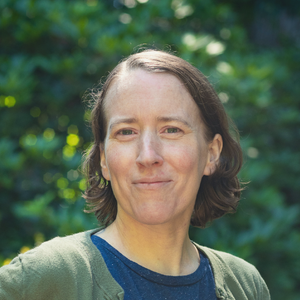
77: Permission to Feel
With Federica Torri
Are you hiding from your emotions? In this episode, I talk with Federica Torri about giving yourself permission to feel and:
Embracing your sensitivity and understanding the deeper role of the trait
Why it’s important to freely express yourself and how to find your way back to your inner world
How to let go of the “shoulds” and be more of your authentic self
Federica is a high sensation seeking HSP who has struggled her whole life with the feeling of not belonging, and always feeling "too much". Originally from Italy where she trained as a PhD biotech neuroscientist, Federica moved to the US to embark in a 10+ year career in software biotech where she experienced a deep burnout. After an endometriosis diagnosis she pivoted her career towards women's health patient advocacy and coaching, to then a Trauma Informed Yoga teacher and Reiki Practitioner. Federica founded Tender Flower Yoga in 2024 as a sanctuary for sensitive hearts to find a place to rest in Gentle Yoga, Healing Mudras, and Yoga Nidra. People say she has the gift to tuck people in, and make them feel welcome and cared for.
Keep in touch with Federica:
Website: www.tenderfloweryoga.com
The Sovereign Sensitive Blueprint: https://www.tenderfloweryoga.com/blueprint
MiniBloom Kit: https://www.tenderfloweryoga.com/get-minibloomkit
Inner Bloom Circle mailing list: www.tenderfloweryoga.com/inner-bloom-circle-signup
Instagram: https://www.instagram.com/tenderfloweryoga
Resources Mentioned:
Highly Sensitive Person by Dr. Elaine Aron: https://bookshop.org/a/63892/9780553062182
Niksen: Embracing the Dutch Art of Doing Nothing by Olga Mecking: https://bookshop.org/a/63892/9780358395317
For more deep conversations like this, join me in Sensitive Circles - a cozy online community for highly sensitive people to find meaningful connection and deepen self-awareness at their own pace. More details: https://www.sensitivecircles.com
Thanks for listening!
You can also follow "SensitiveStrengths" for behind-the-scenes content plus more educational and inspirational HSP resources:
Instagram: https://www.instagram.com/sensitivestrengths
If you have a moment, please rate and review the podcast, it helps Sensitive Stories reach more HSPs!
This episode is for educational purposes only and is not intended as a substitute for treatment with a mental health or medical professional. Some links are affiliate links. You are under no obligation to purchase any book, product or service. I am not responsible for the quality or satisfaction of any purchase.
Episode Transcript
Federica Torri 0:00
But it's not about thinking that you need to improve, be different. It's actually about being sovereign in your inner world. It's a very chaotic world when you are an HSP. But that's why when you hear somebody tell you how you should feel, just run or just say, I can, I can feel it.
April Snow 0:27
Welcome to Sensitive Stories, the podcast for the people who live with hearts and eyes wide open. I'm your host, psychotherapist and author April Snow. I invite you to join me as I deep dive into rich conversations with fellow highly sensitive people that will inspire you to live a more fulfilling life as an HSP without all the overwhelm. In this episode, I talk with Federica Torrey about the power of deep rest, safely finding your way back to your inner world, and slowly making space for all your feelings. Federica is a high sensation-seeking HSP who has struggled her whole life with the feeling of not belonging and always being too much. Originally from Italy, where she trained as a PhD biotech neuroscientist, Federica moved to the U.S. to embark on a career in software biotech, but after an endometriosis diagnosis, she pivoted her career towards women health, patient advocacy, and then became a trauma-informed yoga teacher and Reiki practitioner. Federica founded Tender Flower Yoga in 2024 as a sanctuary for sensitive hearts to find a place to rest in gentle yoga, healing mudras, and yoga nitra. People say she has the gift to make them feel welcome and cared for. And just a reminder that this episode is for educational purposes only and is not intended as a substitute for treatment with a mental health or medical professional. Let's dive in.
Federica Torri 2:22
I am so excited, April. Thank you for having me. Yes.
April Snow 2:26
I'd love to hear more about your HSP discovery story. How and when you realize that you're highly sensitive.
Federica Torri 2:32
Yeah, it has been a long journey, I have to say. I'm in my early 40s, and the true discovery of me being an HSP just came eight years ago. So in my mid-30s. And I've always been a seeker. I've always been trying to find, I would say, explanations to my inner world. And because I have to confess that I had this innate belief that there was something wrong with me. And it came from just reacting differently to things than most people. I don't know, like group setting, long parties, conversations that were just surface level, not being able to recover from conflicts so easily, being overwhelmed often. And so the typical, you know, the typical signs. And I tried everything in my exploration, also because I had lots of trauma in my life. And so it's hard to detangle, right? What is what? And I, of course, did therapy, explored internal family system, did uh familiar constellation, anneagram, human design, like you name it. And what happened is that I had all these pieces of a puzzle, and they were telling me something. Like I'm a type 4 enneagram, very dramatic, very romantic, always focus on what I don't have. And yes, it was useful to know it, but then the thread, the red thread was missing. And I found it in 2018. I still remember it was winter, like early January, and somebody recommended the Dr. Ilean Aaron book, the highly sensitive person. And I read it in four days, and I want to just show how it is because every single page was an illumination for me. And I define it as the permission slip for me to exist. And it gives me chills to say this, but it's true, is the permission slip to be like I am because I was trying to really change myself and to be different, to be like the others. And my mom always, since I was very young, was like, I don't know why you're so obsessed about being like the others. And the reason is that I just thought I was just made with the wrong, with the wrong mold. There was something wrong with me. And so I think there is a before and after from this book for me. Now that I knew that I could exist and be myself, I then tried to shape my life so that my life honored up. And it took a long time, and there's no perfection whatsoever in anyone's life, right? But the lights are more dim. I schedule group time very carefully. I need alone time. I also cut a lot of relationships that were just constantly creating the struggle of explaining how I feel. And we create void and abundance at the same time. So I am very grateful for everything that I have explored.
April Snow 5:32
Such a beautiful unfolding. Seeker is such a relatable word. And you're going through the IFS, the family systems therapy. I imagine some spiritual exploration and trying to figure out who am I and am I okay? And oh, you're so true that we need that permission slip to say, I can be how I am. I don't have to change, I can lean in, I can embrace it, I can make adjustments. Such a needed experience.
Federica Torri 6:00
Right. And it takes sometimes a lifetime, but that's a very precious message I try to share. If there's one thing that I share with people, especially because I tend to attract, I teach yoga and do Reiki, and all the things I do, I attract a lot of sensitives. And if there's one thing that I try to share, is this permission slip of you can be exactly who you are and what you feel is sacred. So I hope I help the people I meet on my way.
April Snow 6:32
Oh, I love that so much. You're giving that back to your students and the people around you. And I'm curious, you mentioned your mom and there, and you know, I know you grew up in Italy, and I'm wondering how was your sensitivity, your emotions received during that time?
Federica Torri 6:51
Yeah. Well, okay, I you would have said that coming from a very passionate and loud culture, I will like be yes. But yeah, as old to an organization, I have to actually break the myth. I also grew up in the 80s and 90s in my developmental years, and it was different times. I feel so old saying this, but it's true. Right there with you. I mentioned compared to some. And I have a memory that comes up when I think about this of being in elementary school in a circle playing during recess and just feeling inside that somebody was not doing well. And so I went inside a circle and I asked, is everybody okay? If you like, think about the seven years old, like old Carlson. And I remember I received such an aggressive, reactive response, like, yes, why? You should just mind your business. Why do you always have to be heavy? And it's just one memory, but since a young age, it was not really welcomed, how perceptive I was. Definitely not in the pack. And in Italy, there's lots of gregariousness in the culture. And so I was trying to learn the rules to belong. But a lot of the things that I felt that I knew were true, since they were invisible, I was treated a little bit, you're too much, you're too dramatic. No, absolutely not. Like a lot of raised eyebrows, right? In my family, I am a firm believer that I am the daughter of two HSPs. And a firm believer, and uh, and in their times, they didn't get, of course, the witnessing, the support they needed. And so I received a lot of love, a lot of practical love. I didn't receive a lot of the validation of my feelings or witnessing, or just there was so much love that they wanted to jump in and fix what I was feeling. But the message came true often as, oh, what you feel is wrong, and you should not feel like this. And I have no, I have no doubt that that it was out of big love, but definitely this message had resonated in me about something being wrong. And this has been also in friendship when I was overseas. Still, I had a lot of friendship where I had a lot of eyebrows risen and about oh, you're always so dramatic. And so there has been a lot of intellectualization that I did about emotions because they were so scary. See that these days sometimes my mom tells me I don't understand why you need to understand why you feel this way. And I try to explain that it's because I'm learning at 40 years old to just feel and to just feel in the body, just the sensations like, oh, because actually, if I feel it in 30 to 60 seconds, it flows, right? But it again takes a lifetime. So I would say that it has been a journey that required me to make a lot of decisions, but and I also had a vivid imagination as a lot of HSPs, built a lot of idealized parallel universes. Yes. And so that is something that's still this day putting roots down into the ground is a work in progress.
April Snow 10:16
Yeah, it is a pro it is a process, especially that's the thing. Even if you have sensitive parents or caregivers, they definitely didn't know because the term wasn't out, the trait wasn't recognized yet. But they have all these messages that they received from their parents and the grandparents, and that sensitivity is weakness or it's inconvenient, and we have to toughen up. And so you are now doing that work to rewrite the messages.
Federica Torri 10:46
Yeah, and I try also, I mean, I live far away from my family, but we are very close, and it's something that I try to do also with them. Sometimes at just giving legitimation, does this word exist? Legitimation to feelings without deeming them right or wrong. Like I'm sharing, I'm feeling this way, but there's nothing to do, I'm just feeling this. And yeah, it's something that I feel is very valuable to explore.
April Snow 11:15
It's so valuable. And I appreciate that you said if we let ourselves be in our emotions, they actually move through so much more quickly. Instead of when we fight them and push them down, they come back tenfold. So I'm wondering what that process has been like, going from you know, childhood where people would raise their eyebrows and would say, you know, you're being, you know, too much, or don't worry about it, to now really sitting in your feelings and accepting them and embracing, you know, your bigger emotions. Yeah, I'm curious if you could share a little bit more about what that journey is look like.
Federica Torri 11:52
Oh my
From Fixing To Feeling
Federica Torri 11:53
god. Yeah. So there's so many axes that intersect. I'm gonna try not to speak for three days, but no, I'm kidding. But definitely the first break of the building has been reading this book. This helped me embracing my sensitivity like exponentially. Another thing in my journey that was very important was to learn about neurodivergence. And I definitely don't tend to put myself in a lane that is not mine because I'm not a therapist, but it was important for me to learn that not all brains are the same. And so to find also a possible space for me in the world. Like for myself, like saying, oh, maybe I just don't function like 80% of the people. And another thing that my journey was very important was also meeting teachers like Asia Suller and others that have been incredible teachers to me, who shared with me the ecological meaning of being highly sensitive people. And what I mean with ecological is like knowing that in nature, high sensitivity is a trait that is suspected. Like 20% in most species, 20% of the individuals are highly sensitive. And this is a role in the community as a whole, because they can hear noises earlier. They can know if a plant is venomous earlier. And in ancient cultures that we think they were behind us, of course, but actually ancient cultures, highly sensitive people were probably oracles. They were the sacred people in the villages that they, I don't know, they were in communication with the things that are not immediately visible. And so this perspective has been incredibly influential. And also my journey with my chronic disease, I have to say, I don't want to start crying or become dramatic. But I have endometriosis, and there is a very incredible parallel between being highly sensitive and having endometriosis, because most of your life you spend your life having people not believing you or telling you that what you feel doesn't exist. And so that has forged me to who I am now, like this kind of rising phoenix where I don't allow anybody to tell me how I should feel, but it took a lot, a lot of suffering. And another thing that is central in my journey has also been my shift from a very cutthroat, in a way, career. I'm a scientist in the background, unbelievable. I'm a scientist, I have a PhD in medical biotechnology and neuroscience. I then worked in a tech software in customer experience for a long time. And then did some patient advocacy and now I'm teaching full-time yoga and yoga nidra, especially this mindfulness meditation that we can do layang, the yoga of sleep, right? And yoga has been an incredible friend. My practice as a vowed, I found a practice that is incredible for highly sensitive people, that is yoga nidra, where rest is truly sacred. And I discovered that we are multidimensional. Even thousands of years ago, people knew that we are. This is what I say, this is the meme that I said I wanted to do, but then I cannot compete. But is that you are not too much, you are multidimensional. Because it's true. Yeah, these ancient texts they say that we have five layers of kosher from the body, the breath, energy, the loving witness, bliss. And so this has been incredible. And the last thing is finding a tribe. It has required a lot of hard decisions, but being surrounded by people now where I don't have to use all my energy to explain myself and to justify because I could feel it in my body, I fulfill and I have your approval. Like I was trying to get approval just for breathing, that has been difficult, but definitely a great part of where I'm now.
April Snow 15:58
Yeah, when we start to see this deeper purpose, because you're right, high sensitivity, it does play an important role in our society, in our communities. As Dr. Lane Erin says, it exists for a reason, it's persisted for a reason. And you're right. When we were living generations ago, hundreds of years ago, we were the healers, the oracles, we were the seers, the seekers. We were the ones tracking what was dangerous and noticing what plants were safe to eat and remembering and cataloging that information in our minds. There's a big purpose. It's much more complicated in present day. Yes. So we do have to find those safe people and spaces and practices. And so I'm not surprised given your nature that you went from neuroscientist, scientist to teacher or healer.
Federica Torri 16:53
Yeah, I was a little bit, I mean, I found a way to have very strong relationships, even in these very like linear paths, but definitely I was always looking around and saying, ooh, I'm different here as well. Like I don't know if I'm the right point.
April Snow 17:11
So I'm
April Snow 17:12
curious, this is a little bit of a sidestep, but you know, what are you looking for in those spaces where you feel safe? What does community look like for you now?
Federica Torri 17:21
This is a great question. I just was having this conversation with a friend recently. I realized that it really changed, especially in the last few years. Now, my main, and this is not something I decide cognitively is really something I feel, is about being surrounded by people that are benevolent, where there's no judgment, where there's not that feeling that it's ready spooling you and trying to. I don't, it's hard to put words in it, but where the energy is in the connection and not in the explanation. And this really, really, really changed. And as I said, it required some decision, some disconnections, but the absence of judgment is for me and a very important thing. And having people that celebrate your wins when you are winning, and also they can sit with you when you have big feelings, when you're in a black hole. That for me, that is safety. And I don't use the word safety. I know that the word safety has a lot of connotations, especially. I mean, I personally have complex PTSD, so it's not something I use easily, but definitely places where I can say today I feel I'm very sad.
April Snow 18:40
Today I feel I'm having this grief, and there's no no like, uh, you know, right, where you can actually show up as you are in that moment that day, and there's no pushback, there's no questioning. It's okay. Yeah, open arms.
Federica Torri 18:57
And that's it's okay, is incredible because if we said, like, if you imagine saying it to your little little Federica child or your little April, like it's okay, it's such a small thing, but it's a message that it's so powerful. It's okay, it's okay. Sometimes I tell myself, I am sometimes I feel I feel I'm a little child. I wash my teeth, and I was like, today I feel sad. It's okay.
April Snow 19:24
Yeah, exactly. Yeah, like just because that younger, all those different younger parts are still in us, those memories, those energies, however you want to hold it. And yeah, just to take a moment and say, Okay, I see you, I'm here with you. It's okay, you're okay. Feeling this way is okay. It is powerful, it's it is incredibly simple, and that's usually what works. It doesn't have to be complicated.
Federica Torri 19:50
And you know, like how you said it, this is exactly what is in these very ancient texts in the layer. So, in these layers, I don't want to go off on a tangent, but I think it's very interesting to know how much wisdom there was already. The first layer is the body, the second layer is the breath, the third layers, thoughts, and feelings. The fourth layer is the witness, and the witness is described exactly like you said, like this loving mother, right? Bird's eye view that says, I see you, I know you, I love you. It's not like this is wrong or right. And reaching the witness is not something that should be imposed as a result in any practice. I feel that the mainstream yoga sometimes says, Oh, if you do three minutes of this, it's you know how people sell things. It's rigid, it's goal-oriented. Actually, some days I practice, I don't reach witness at all. Maybe I don't reach it for months, but there are micro moments that are so valuable where everything around you might be on fire, and you're like, oh, okay. Even like a second, I think is very valuable.
April Snow 20:57
Yeah, it's incredibly valuable to be able to just meet yourself where you are and not force a certain state of mind or a practice. You know, we've had enough of that as HSPs, that conditioning, those messages where we're trying to put ourselves in a box and we really have to break free of that. I I agree. Yes.
April Snow 21:18
So I'm curious, you know, we often will bypass our own needs, we push our feelings down, we will try to be like everyone else. So there's a lot of these shoulds that come up. So how like I know you work with clients and I know you've done work for yourself, but how do we start to let those shoulds go or transform them?
Federica Torri 21:41
Yes, I okay, I love. Doesn't this have a meme where if somebody tells you how you should feel run? I thought I was should make that is good. That's isn't that good? So this is a great question. This should be related to how we should feel. I heard thousands just. By myself and in my own life. And I think the freedom is not just to express what we feel, but even just to feel it. It can feel an insurmountable mountain. And because we have introjected these messages of there is a problem with you. Like it doesn't. And I, a little story, I was doing a business school at some point on how to create content online. And there was the marketing model where the people you serve needs to have a problem, right? When you need to let's find the problem. And I remember that my mission came out very strong, like a Phoenix, because I put my foot down, I was like, actually, my philosophy is that HSP is empaths, highly sensitive. There was never a problem to begin with. And I started almost screaming it at the camera. I was like, no, we can show possibilities, we can show even with the practice that I share, I can show you a possibility of reaching a state where you're calm and where you have micromomental peace. But it's not about thinking that you need to improve, be different. It's actually about sovereignty of the inner world. And this is a word that came to me very recently: the concept of being sovereign in your inner world. It's a very chaotic world when you are in HSP. But that's why when you hear somebody tell you how you should feel, just run. Or just say, I can I can feel it. And how I helped, so I've been teaching for around two years. And I founded the Tender Flagwar Yoga when I was a baby teacher with this vision of just creating a sanctuary for sensitives. And how I make people feel they can let go of the shoes. First of all, I say it. I always preface by saying that there's no way that is right or wrong out how people should feel. Actually, I even always say you might not even know how you feel. And that's absolutely fine. And the second thing is that I really try energetically and with my mind and everything to be with. So to companion and to create warmth around the practices. And the way I teach is summarized in a framework that actually I created after I realized that I was teaching that way. Because this is how I function. Like I do intuitively things, and then actually I'm teaching exactly according to the layers of being of the coaches we talked about. And so it's bloom. And we start always with B, that is B here. And being here has lots of meaning. A lot of yoga teachers pushed you as the idea. Now feel your body. No, actually, like softness, right? Maybe I just feel that my foot is on the ground and today it's enough. And then the L is lending in breath, just starting to notice the breath, how it flows. And then we are open to feelings, meaning not to feel something, but just to notice what is present. Some days we don't want to go there, maybe we're too anxious, so it's absolutely fine. And then the second O is about observing with compassion, that witness. Sometimes we get here or not, but there are moments in practice where you might look around and you feel that you're one with all this community gathering. And then the last is M is making space to bloom. And it's just when there is calm, aliveness in nervous system and body, so that you can truly just feel a joy that is not fleeting. And that's not the goal, though. So this is how I realized I was intuitively teaching, and it really, I almost gonna cry. It warms my heart after such a long career in a more analytical world. The feedback I'm receiving from sensitives telling me that they feel like wrapped in a blanket, that they found parts of their inner child I didn't talk to for a long time, or I give spa for the soul. And so um, this is like what I do low stimulation, low lights, the music also very low, or no music at all, and also imagination as a beautiful bridge. I think HSPs have vivid, incredibly vivid imagination. Not everybody, and it doesn't mean being visual, that's very important. I always say you don't need to be visual, but people go on journeys where they come back and they're like, Oh, I had this inspiration. So it's beautiful to just witness this.
April Snow 26:42
Yeah, it sounds very welcoming and warm and perfect space for me because I am very visual. And you know, also though, you never know where you're coming in from. So just this perm again the back to the permission slip to be wherever you are in whatever way you need to be and not forcing it. So yeah, if the emotions come through, wonderful, we're welcoming them. If maybe we don't feel safe in our body today, or generally, we can kind of yeah, let's just focus on the outside layers, the foot on the ground, or you know, my hair on my shoulders, or whatever it is. And I love the bringing in that witness as things are unfolding. It just there's a lot of space there to meet yourself where you are and yeah, not force it or try to keep up with what you think you're supposed to do. Because there is a lot of that that bubbles around.
Federica Torri 27:34
Yes, yes, and especially because in the West, the yoga and wellness world has been focusing a lot on the poses that are called asanas in yoga. And when people actually land in environments where we cannot care less if you can do a handstand, like I truly for me, I'm like, let's tuck you in. I I am I have a PhD in assisted napping, actually. That's what the student told me. I was like, Are you sure you're a scientist? Because I think so there's enough. Everybody, I everybody their own. I believe there are wonderful teachers that do that for me in a world that is so chaotic and full of suffering at this moment because I think denying and bringing this model of love and light is very toxic, and I'm very strongly opinionated on this. And so for me, it's all about creating a little nest so that people can have an hour where they just can try to be in the space.
April Snow 28:36
We need a nest.
Federica Torri 28:38
I need a nice or a tree house or a tree house. No, we all yes, a cocoon. Yes, oh my god, or a feather nest. So it would be a dream right now.
April Snow 28:52
And I'm wondering, you know, for folks who are listening, was there a first step that you might offer that they could start creating that little feeling of a nest at home if they're not ready to come to a class yet? Or what could be our very first step towards that? If you could think of it.
Federica Torri 29:10
Yeah, the one I think uh first is like just finding breadcrumbs back to the body. And with that, I mean that for everybody is very hard to be in the body. There are many reasons, and you being a therapist, you know 1000 more than I do, even so many reasons why we are not in the body. First is that the world is going at a speed that we were not even wired for, and then if you have the trauma and everything else, yeah. So say now I am in the body is not going to work. It's all about consistent microments. What I send in my weekly newsletter, I have the weekly love notes that I send, are very little practices that are we place hands on the heart and just feel the pressure or just gentle pressure. Maybe some other times there is a breath or a reflection. And so the breath comes to the body because, as one of my teachers said, the body is slow, is really earth energy without becoming too woo-woo. The body is in the moment, that the body is the one that actually has a very, very well-developed alarm system. It's just to learn my teacher, she said that the body is like a bird in a forest. When there is a new visitor, they just like sing to tell everybody, oh, there's somebody new. And we have an alarm system that tells us when we are overriding ourselves, but it's hard to listen to it when there's so much going on. And so, little touch mudras, like even this is a mudra, actually, one hand on heart, the other one on top, is the mudra of the open heart. Noticing that another small practice that I try to do before bad, that it takes 30 seconds, is self-tracking. And like scanning the body and say, ooh, is there any sensation? And without saying good or bad, like, is it warm? Where is it? Is it what quality it has? And immediately I feel that I come back in. And the third thing is indulging in tenderness. And tenderness doesn't need to be that we need to spend thousands of dollars in a spa. Tenderness can be, of course, it is a privilege in a way, because in some situations we might not have a lot of time for it. But it could be a soft surface, it could be indulging in smelling a flower for a second. This concept of allowing and tending, in a way, like it really helps me to visualize sometimes having a flower in your chest. This is one of the most successful practices that I share. And you inhale these flower blossoms and exhale these petals, just flow. You have your own little flurry. And imagery is so powerful, even if you're not visual, it really envelops you in a liminal space where consciousness kind of even the wavelengths of the brain can change. And yeah, and also remember to anybody who tell you, you should feel some way, you're not too much, you're multidimensional. This is like like my teacher said, we are like strativarious violins, we are just highly tuned instruments, and so we just deserve that maybe more specialized scare.
April Snow 32:34
We do, and it's a great reminder when you're talking about these little mini bloom practices that as highly sensitive people, those snippets of practices actually are very effective for us. They're really grounding and regulating, and so taking 30 seconds could actually make an impact. We may think, oh, it's not going to do anything, but it we're so attuned to the subtle that sometimes that's all you need.
Federica Torri 33:03
And also, I feel that we're since a young age, we're so attuned to everything around. And I experienced it in my whole life too. I realized that it was very hard for me to actually be attuned to myself.
April Snow 33:16
Yes.
Federica Torri 33:16
And so changing, like if you have a camera and you just slowly like for a moment, it's sometimes rarely, because I I really struggle with self-compassion. It's something that I'm building now. I'm so good at having compassion for others and then so strict with myself. But having a moment of I know it sounds like a little bit not crazy. We don't say crazy, but sometimes I even talk to myself and say, Oh, you feel tired? It makes sense that you're tired. And so, yeah, it's a one-second talk. And I can feel that something all of a sudden shifts. It's true.
April Snow 34:00
When we give ourselves a little bit of validation, a little permission, a little soothing, it does shift and it can take time depending on our histories and our nervous systems and you know all we've experienced. Yeah, we can start that change even in a moment. And I know self-compassion can be edgy for some people, depending on what you you know, your background. And we can start slow, you know, we can slowly ease in sacred timing. We take our time. We really do. So if there's you know, someone who's listening, that maybe this sounds really welcoming and exciting, and but maybe they're struggling to start to be present with their feelings. Is there a final message or an encouraging note you could share with them?
Federica Torri 34:52
Yeah, yeah. I mean, my main message here is about truly stepping that sense of being sovereign within. And this doesn't happen just overnight. But the idea of connecting back to the body, like I said before, that's one of the main things I would do. And I would remove the pressure of perfection, of time, of length of practice. Can I be very bold as a yoga teacher and tell you that I don't sit and meditate 20 minutes every day? I discovered over time that I tried with Pasana meditation, silent meditation, I tried many things. For me, for example, something like Qigong and Tai Chi is highly meditative because for how I am, this meditative movement. And so giving themselves the freedom of finding something that works. It could even go out and seeing a tree. It doesn't need to be like everybody else. And the second thing is don't underestimate the power of rest. Rust is incredibly difficult for me personally. I grew up with this almost pathological productivity. I think I was burnt out one second after I was born. Like I was already burnt out in a way. It's very hard for me to stop. And one little thing is putting a timer for 30 seconds and not doing anything. Scary, very scary. Just increasing the time. It's called Nixon, actually, in northern culture. I think in Finland or Norway, but yeah, it's in Nixon is the practice of doing nothing. And that can be an easy way. It's not labeled as a spiritual practice. We're not having to chant or do anything, but can be, I feel, incredibly empowering. And the last thing if people are struggling to express feelings, is also to not pressure themselves to satisfy any timeline. Expression, I think, is separate from the freedom to feel. The freedom to feel comes even before the expression. And so I think just really noticing, maybe it's just starting to notice what spaces are taking from us so much energy in explaining what spaces make you feel a constriction, perhaps in your chest, where you feel you need to even justify the reason why you breathe. And just noticing without having to change anything. Changing may put so much pressure. But just noticing is a great starting point.
April Snow 37:50
Oh, it's such a good starting point. Just being aware, being that witness, being here, however you want to say it, and then slowly, you know, allowing yourself to go inward to try on some of these practices. And I appreciate you saying that it doesn't have to look a certain way.
Federica Torri 38:20
Yeah, it's a birthright, actually. I'm gonna go even to say it is a birthright.
Federica Torri 38:26
And for example, like for many years in my yoga practice, I've been a practitioner for around 15 years, and at the beginning, I was practicing the fancy yoga with all these shapes, and then actually, when I met Yoga Nidra, as I said, is one of the really the key, the yoga of sleep, where you literally lay down and you travel with your imagination. Like the impact that that had on my chronic pain, I cannot even, I can not, yeah, I cannot even describe it. My teacher, Jennifer Reese, I wrote her an email a few months ago or like a year ago, sharing that it really changed my life. And for other people, maybe Yoga Nidra, I think for I leave sensitive people, Yoga Nidra is good to begin with because it really brings you to all these complex layers of your being and is very healing. But for me, that's the thing that works the most. And my pain went often from an eight back to a three or four after a session. And so it can there is uh again, I don't go in lanes that are not mine, but I strongly believe in the mind-body connection and a lot of HSPs deal with chronic pain. And I think finding soft practices can be an incredible tool, not to make people maybe go away completely, but to companion it. It's a hard path having chronic diseases, and but yeah, we can try things.
April Snow 39:53
We can try things, and yoga nitra is such a great fit for a lot of HSPs because it it frees up the mind to wander and process, but you're also heathered to someone's voice, so you can feel a little bit more at ease if that's not comfortable yet, of just being in your inner world. So, yeah, it's one of my favorites. Also, I love, love, love Jennifer Reese so much. Jennifer, we love you. Love you. I her voice is so soothing, her energy. I've taken some of her classes at Kopalu and she is a gift.
Federica Torri 40:30
She has been my teacher. I actually did the teacher training with her, I did the full mastery one, the advanced as well. And she, I mean, she changed my trajectory as a teacher because after meeting Yoga Nidra, something clicked in me, and I bring that into everything I do and in my practice. So, Jennifer, we love you. I'm not paid to say that. We love you. I just, yeah, I'll have to talk to you about that more. That's very exciting to hear. Yeah, yeah, I love Jennifer. I met her for the first time last year after three years that I was following her. And I was like struck by a celebrity and was like, oh my god, Jennifer, I cannot believe I moved.
April Snow 41:17
Oh, it's so amazing. So, yes, we're big fans of Yoga Nidra. Big, big, big fans. Oh, well, thank you for all that you shared today, your story, you know, these resources.
April Snow 41:30
I'll make sure that folks will be able to get in touch with you. I'll share your website, your social media, all of your resources in the show notes. But before we go, I'm wondering if you could tell listeners a little bit more about what you have to offer.
Federica Torri 41:42
Yes. Yeah, so I just got into the online space. So I've been teaching full-time live classes, but now I'm trying to build this sanctuary online. And so I have a mini bloom kit that is a free resource and it's an on-demand, so you can do it whenever you would like. Three days experience. I call it a mini retreat, where we truly harvest all the beautiful like qualities of gentle yoga, restorative yoga, yoga nidra mudras. And so I like to think about it like a little walk in a greenhouse. And so the first day we find a sequence of mudra that is very much heart-centered, where we allow and tend, and this image of the flower in the heart is very beautiful. Day two is a restorative yoga, very gentle movement. We do together, and the third day is a beautiful yoga nidra journey. So a tiny bit longer. We travel in the moss porous, we just lay down in a beautiful flower. Is I had incredible feedback for this, and I put my entire heart into this first steed. And I'm working at also other offering, always very much nature-centered, because nature is my main inspiration. And so, yeah, uh, I also have a newsletter. If you decide to be part of this mini bloom kit, you will be in my newsletter receiving some love notes on a weekly basis for sensitive hearts, or otherwise, I shared with April also the link to the inner bloom circle that is my mailing list, and I will love to just get to know anybody who wants to share space. Oh, it sounds so delightful.
April Snow 43:21
Just my cup of tea for sure. I'm a big visualizer, so that is just and I often will go to nature spaces in my mind when I'm doing body work or Yoganidra or Shivasana meditations, however, I'm journaling inward. I'm journey inward. Um, so yeah, it sounds amazing. Thank you so much.
Federica Torri 43:46
And if I can adjust one thing, I know that some people, sometimes people that are not visual, they get a little bit nervous. But I just want to reassure that we are all different and the experience of being. Need your journey is not only through the visual channel. Some people hear things, some people sense or feel. So don't think that is not for you if you're not a visual person, because imagination, we receive the world in different ways. And I had great feedback from people that actually were not visual at all. So I hope you can. Yeah, people can share what they think.
April Snow 44:20
Oh, that's good to know because you're yes, people have attachments to different senses and experience the world through different senses. So it's helpful to remind folks that yeah, you can go and connect through it through multiple channels. That is reassuring.
Federica Torri 44:35
Yeah. That's so beautiful. That's the beauty of Yoga Nidra. You can love it more.
April Snow 44:40
Exactly. Magical. Magical. Yeah. Thank you so much. Thank you, April. Thanks so much for joining me and Federica for today's conversation. I hope you feel inspired to be gentle with yourself and your big emotions, giving yourself time to slowly look inward and see what needs attention. You can access Federica's mini bloom kit, which includes three days of gentle yoga and meditations at tenderfloweryoga.com or head to the link in the show notes. If you enjoyed this episode, subscribe to the Sensitive Stories Podcast so you don't miss our upcoming conversations. Reviews and ratings are also helpful and appreciated. Check out the show notes or head to sensitivestories.com to find all the resources and the transcript from today's episode. Thanks for listening.